How to Build Your Strength for Pole Dancing
Pole dancing looks hard because... well, it is. But here's the secret: you don't show up strong. You show up, and the pole makes you strong. This guide explains how that happens, what muscles you'll use, and how to get started even if you can't do a single pull-up.
What "Pole Strength" Actually Means
The biggest myth about pole? That you need to be strong before you start. "I have no upper body strength!" is something every instructor has heard. Let's be clear: You don't start pole because you're strong; you become strong because you start pole. 1 The studio is where strength is built, one spin and one climb at a time.
The Three Types of Muscle Work
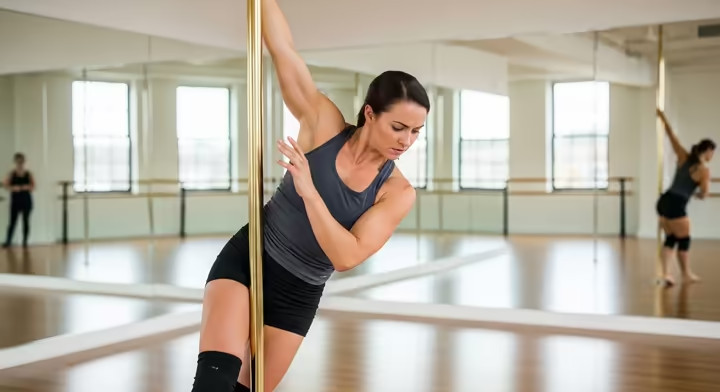
Pole builds three types of strength at once. First, there's concentric strength, the "lifting" part where muscle fibers shorten to overcome a force. 3 You use this every time you pull your body up in a climb. Then there's eccentric strength, the "lowering" part, like a slow, graceful descent from that climb. 4 This builds tough muscles and helps prevent injuries. 4
Finally, you've got isometric strength, which is just holding still. 3 During an isometric contraction, your muscles are working but don't change in length. Any time you freeze in a pose, like a pole sit or crucifix, you're using isometric strength for pure control and endurance. 5
Functional Strength
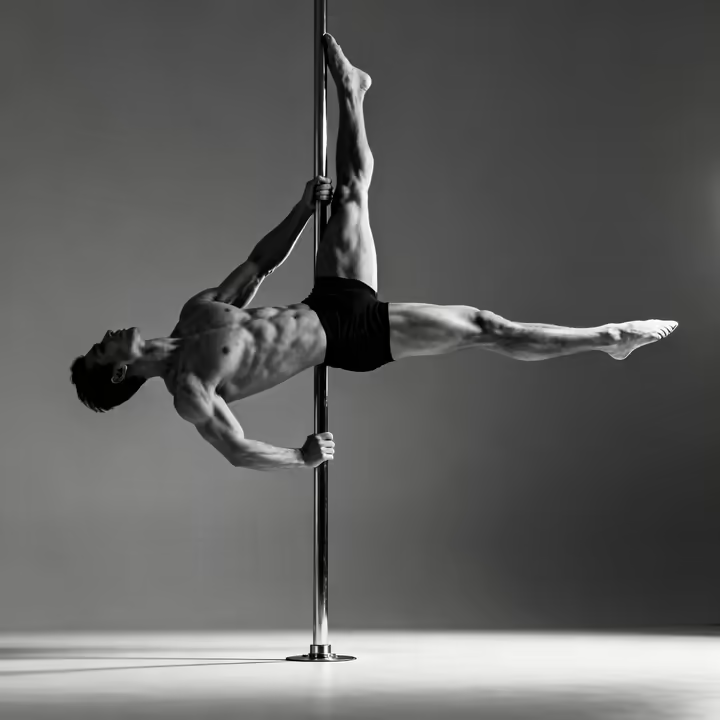
This mix of lifting, lowering, and holding makes pole such an effective workout. Unlike gym exercises that often work one muscle at a time, pole makes your whole body work together as a system. 8 You're pulling with your arms, gripping with your legs, and holding your core tight all at once. This builds functional strength , the kind that's about coordination and controlling your own bodyweight. 8 An advanced dancer becomes a clear picture of what this kind of dedicated practice can create.
The Muscles You'll Actually Use
Forget generic terms like "upper body and core." Pole dancing uses a coordinated system of muscles where every part of the body has a job.
The Pulling Powerhouse
Your back and arms do the heavy lifting... literally. Your latissimus dorsi (the big, wing-like muscles in your back) are the main engine for climbs and inverts. 10 Your biceps help flex the elbow in every pull, and your forearm muscles create that all-important grip. 14
The Pushing Framework
You'll do a lot of pushing, too. Your shoulders (deltoids), chest (pectorals), and triceps work together to create space and provide stability. 16 In any split-grip move, one arm is pushing while the other pulls. 18 This balance of pushing and pulling keeps your shoulder joints healthy and happy. 20
Your 360-Degree Core
Your core is more than just a six-pack. Think of it as a 360-degree cylinder of muscle, including your abs (rectus abdominis), obliques, and the erector spinae muscles of the lower back. 10 This "core canister" works to keep your spine from buckling under pressure, especially when you're upside down or holding a horizontal pose like a flag. 22
Don't Forget Your Legs
Beginners are often surprised by how much leg strength pole requires. Your glutes and hamstrings help lift your hips into an inversion, while your quadriceps and hip flexors lift your knees to your chest for tucks. 24 Your legs are also critical for gripping the pole in various hangs. Even your calves and feet get involved, pointing your toes and adding stability.
The Unsung Hero: Grip
For most beginners, the first big challenge isn't back strength or core strength... it's grip. 28 Your hands and forearms will be the first things to get tired. A secure grip is the foundation for everything, involving the flexor muscles of the forearm and hand, and it's something you build slowly over time through practice. 29
Getting Strong Off the Pole
Consistent pole class is best, but off-pole training is your secret weapon for faster progress and injury prevention. Good cross-training strengthens the muscles that support your pole moves and builds up the opposing muscles for a balanced body. It's like building a scaffold that lets your pole skills get higher, safely.
Basic Strength Training
Focus on compound movements that work multiple muscles. Rows (with dumbbells or bands) build the back muscles you use for climbing. 30 Push-ups are a must for building chest and shoulder strength to balance out all that pulling (do them on your knees if you need to!). 14 Overhead presses build shoulder stability for inverted moves, and simple bodyweight squats and lunges build leg power. 33, 34
Core, Core, Core
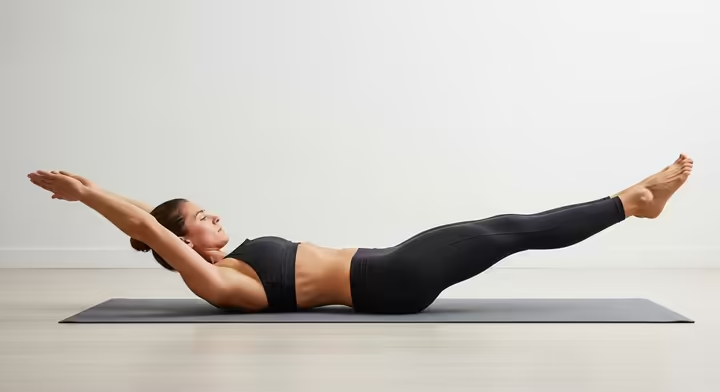
You need a core that can resist movement from all directions. Planks build the isometric endurance for static holds. 37 The hollow body hold is perhaps the single best exercise for teaching the full-body tension you need in the air. Leg raises build the lower ab strength for lifting your legs into an invert, and anti-rotation exercises (like a Pallof press) train your core to handle spins. 22
Flexibility and Mobility
Strength without flexibility is a recipe for injury. If a joint can't move the way it needs to for a trick, your body will compensate in unsafe ways. 40 Yoga or regular stretching are fundamental for injury prevention, especially for your shoulders, hips, and thoracic spine. 21 This keeps your joints healthy and ready for all the cool shapes you want to make.
Conditioning On the Pole
While the gym helps, the pole itself is your best piece of equipment. Training on the pole builds muscle and teaches your body proprioception, which is your sense of where you are in space. On-pole conditioning is where pure strength meets body awareness.
Beginner Drills
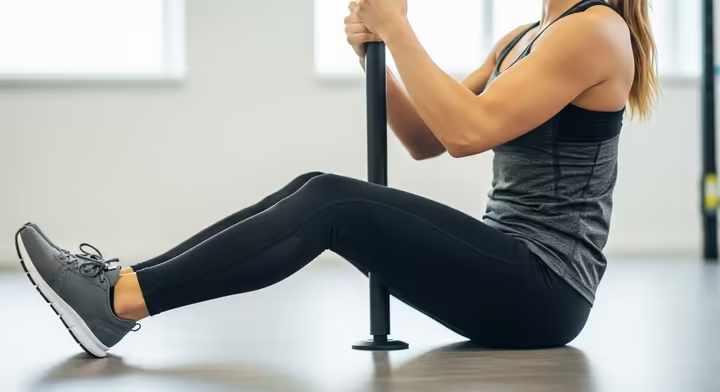
Even on day one, you can use the pole to get stronger. Try seated pole pull-ups: sit on the floor, grab the pole, and pull your hips up, keeping your feet on the floor for support. 43 This isolates the exact back and arm muscles you need for a full climb. 44
To build core strength for inverts, practice tucks and knee raises. You can do this standing next to the pole or, as you get stronger, from a pole sit. 43, 45 This specifically targets the lower abs and hip flexors that lift your body upside down.
Finally, practice basic holds to build endurance and skin tolerance. A simple pole sit (gripping with your thighs, no hands) is a great isometric exercise for your inner thighs and core. 40 As you progress, try holding a crucifix preparation, where you hook both knees on the pole from a climb. 45 These simple holds teach your body to maintain tension and stability, the foundation for every static pose.
Making Real Progress
Progressive Overload (The Secret Sauce)
The secret to getting stronger is a simple idea called progressive overload. You have to consistently challenge your muscles with a little more work than they're used to. 46 In pole, this isn't about adding weight, it's about holding a sit for ten seconds instead of five, doing three clean knee tucks instead of one, or just performing a spin with better technique. 48 Every small improvement tells your body to adapt and get stronger.
The Magic of Rest
But the work is only half the story, rest is the other half. Muscles get stronger after your workout, when your body is repairing the microscopic tears created by exercise. 31 Overtraining by skipping rest days can lead to fatigue, plateaus, and injury. Rest days are an active and essential part of your training schedule, allowing your body to adapt and grow. 51
Putting It All Together
A good beginner schedule might be two pole classes a week with one off-pole training day in between. 52 The other days are for recovery, which can be gentle stretching or complete rest. Learning to listen to your body is key, know the difference between good muscle soreness and bad pain. Recovery is a proactive skill involving sleep, nutrition, and knowing when to take a break.
Common Questions (and Worries)
Starting pole is a mental challenge as much as a physical one. Here are some common hurdles and how to think about them.
"How long until I can invert?"
There's no magic timeline. The journey to an invert is personal and depends on your background and training consistency. 43 The invert is the culmination of all the smaller skills you're building, so focus on celebrating the small wins, like a solid climb or a controlled knee tuck. The pressure disappears when you enjoy the process. 54
"One of my sides is way weaker!"
Yep, that's normal. Everyone has a dominant side. The most important habit you can build is to train both sides evenly, right from the start. 55 Your "bad" side will feel awkward, but training it is fundamental for preventing injury and building balanced strength.
"My hands are too sweaty to grip!"
A classic beginner problem. Sweaty hands can come from nerves or just plain effort. 50 While grip aids can help, think of them as training wheels, not a permanent fix. The real solution is building your grip strength over time, as your forearm and hand muscles get stronger, your natural grip will improve. 28
"I feel so weak compared to everyone else."
It's easy to compare, but try not to. 57 Everyone in the room started somewhere different, some with a background in dance, others with none at all. 58 The person nailing a trick might struggle with flexibility. The only comparison that matters is you today versus you last week. 54 Just showing up is where the real strength begins.
Works cited
- Pole Dancing Myths Busted: What People Get Wrong About the ..., https://ambrdesigns.com/blogs/news/pole-dancing-myths-busted-what-people-get-wrong-about-the-sport
- Debunking 5 Common Pole Dancing Myths, https://poleathletica.com/news/debunking-5-common-pole-dancing-myths
- Concentric, Isometric & Eccentric Training - Athletic Lab, https://www.athleticlab.com/concentric-isometric-eccentric-training-differences-benefits-examples-by-elizabeth-criner/
- What to Know About Eccentric vs. Concentric and Isometric ... - Shape, https://www.shape.com/fitness/tips/eccentric-vs-concentric-isometric-exercises
- The 3 Types of Muscle Contractions and Their Best Uses - Invictus Fitness, https://invictusfitness.com/blog/isometric-concentric-eccentric/
- Eccentric Training: The Need for Negative Reps! - Rochester Athletic Club, https://www.racmn.com/blog/eccentric-training-the-need-for-negative-reps
- Concentric, Eccentric, Isometric, Tempo… What It All Means - fitblissfitness.com, https://fitblissfitness.com/2020/08/07/concentric-eccentric-isometric-tempo-what-does-it-all-mean/
- Should I Go to the Gym Before Starting Pole Dancing? - 123poling, https://123poling.com/Pole-Dance-Knowledge-Base/should-i-go-to-the-gym-before-starting-pole-dancing/
- Why is pole dancing considered a good exercise? - Quora, https://www.quora.com/Why-is-pole-dancing-considered-a-good-exercise
- How can I get stronger for Pole Dancing, https://atriastudios.me/blogs/posts/how-can-i-get-stronger-for-pole-dancing
- Latissimus Dorsi Muscle - Physiopedia, https://www.physio-pedia.com/Latissimus_Dorsi_Muscle
- Anatomy, Back, Latissimus Dorsi - StatPearls - NCBI Bookshelf, https://www.ncbi.nlm.nih.gov/books/NBK448120/
- Is Pole Dancing a good workout? - X-POLE, https://x-pole.co.uk/inspiration/is-pole-dancing-a-good-workout/
- How to Build Your Strength for Pole Dance (Free Training Plan) - PoleFreaks, https://www.polefreaks.com/an-introduction-to-strength-training/
- Beginner spins and forearm pain : r/poledancing - Reddit, https://www.reddit.com/r/poledancing/comments/n9rrh2/beginner_spins_and_forearm_pain/
- 7 Exercises for Pole Dancers (Part 1 of 3) - the International Pole Convention, https://poleconvention.com/cross-training/7-exercises-for-pole-dancers-part-1-of-3/
- Pole Dancing and Muscle Building: 5 Areas It Targets - Pole Divas, https://poledivas.com.au/pole-dancing-and-muscle-building-5-areas-it-targets/
- What is the Push Pull Method in Pole Dancing? | PolePedia, https://polepedia.com/push-pull-method/
- How to pole invert like a boss! Which muscles are we using? - YouTube, https://www.youtube.com/watch?v=SW6h2LngP3E
- Polers in the gym – shoulder circuit quickie! – The Pole PT, https://www.thepolept.com/fitness/polers-in-the-gym-shoulder-circuit-quickie/
- Shoulder Exercises and Stretches to Prevent Injury for Pole Dancers - Dollhouse Fitness, https://thedollhousefitness.com/shoulder-safety-and-tips-to-prevent-injury-for-pole-dancers/
- How to Train Your Core at the Gym to Improve Your Pole Dance: Tips & Exercises – Sway, https://www.swaymovewear.com/blogs/blog/core-gym-exercise-to-improve-pole-dancing-with-daria-part-2-of-3
- All About Pole Abs | Pole Dance Conditioning - PolePedia, https://polepedia.com/pole-abs/
- The pole dancer's guide to hamstring strains - Polisthenics, https://polisthenics.com/hamstring-strains/
- Happy Hamstrings: Fire Up Those Muscles for Greater Strength - PolePedia, https://polepedia.com/happy-hamstrings/
- How to get flexi in your 'hip flexors', https://www.recharge.com.au/blog/flexi-hip-flexors
- Anatomy of pole dance: 6 nerdy hip flexion facts!, https://www.thepolept.com/pole-anatomy/anatomy-of-pole-dance-6-nerdy-hip-flexion-facts/
- Improving Grip Strength for Pole - The Vibe Studio, https://www.thevibestudiolynchburg.com/post/improving-grip-strength-for-pole
- Training Tips to Improve Your Grip Strength | Lupit pole, https://www.lupitpole.com/en/news/pole-dance/training-tips-to-improve-your-grip-strength
- Gym exercises for pole : r/poledancing - Reddit, https://www.reddit.com/r/poledancing/comments/1n09uvl/gym_exercises_for_pole/
- How to Build Upper Body Strength for Pole Dancing - 123poling, https://123poling.com/Pole-Dance-Knowledge-Base/build-strength-for-pole-dancing/
- Push ups for pole dancers - The Pole PT, https://www.thepolept.com/shoulder-health/push-ups-for-pole-dancers/
- Pole gains in the gym: 5 dumbbell exercises for pole dancers, https://www.thepolept.com/fitness/pole-gains-in-the-gym-5-dumbbell-exercises-for-pole-dancers/
- 10 Essential Gym Exercises for Pole Dance Lower Body Strength - Sway Movewear, https://www.swaymovewear.com/blogs/blog/lower-body-gym-exercise-to-improve-pole-dancing-gym-conditioning-essentials-with-natalia-robotycka-part-1-of-3-lower-body
- Pole dancing exercises, https://www.lupitpole.com/en/news/pole-dance/pole-dancing-exercises
- Boost Your Pole Dance Skills: Strength & Flexibility Training - Queen Wear, https://queenwearofficial.com/blog/developing-strength-and-flexibility-for-pole-dancing/
- www.lupitpole.com, https://www.lupitpole.com/en/news/pole-dance/pole-dancing-exercises#:~:text=Planks%20and%20Side%20Planks%3A%20These,in%20the%20abs%20and%20obliques.
- 15 Minute Core & Abs Routine for Polers - PoleFreaks, https://www.polefreaks.com/15-minute-core-abs-routine-for-polers/
- 5 At-Home Core Exercises That Can Supplement Your Pole Training, https://poleconvention.com/injury-prevention/5-at-home-core-exercises-that-can-supplement-your-pole-training/
- 7 surprising health benefits of pole dancing - Insure4Sport Blog, https://www.insure4sport.co.uk/blog/benefits-of-pole-dancing/
- STRETCHES - Indi Pole Dance, https://indipoledance.com/wp-content/uploads/2020/03/Indi_Ebook_FINAL.pdf
- Hip rotation mobility: 8 exercises for pole dancers, https://www.thepolept.com/strength-for-pole/hip-rotation-mobility-8-exercises-for-pole-dancers/
- Pole Curriculum: The ULTIMATE GUIDE to your Pole Journey - The Pole Dancer, https://thepoledancer.com/tips/pole-curriculum-guide/
- 3 pole exercises for invert strength (for beginner polers), https://www.thepolept.com/strength-for-pole/3-pole-exercises-for-invert-strength-beginner-pole-dancers/
- Pole Conditioning Exercises - Unique Aerialists, https://www.uniqueaerialists.com/pole-conditioning-exercises/
- Gotta chair before you can pheonix… progressive overload in pole ..., https://www.thepolept.com/fitness/gotta-chair-before-you-can-pheonix-progressive-overload-in-pole-8-ways/
- How to Apply Progressive Overload to Your Dance Training, https://dance-insight.com/progressive-overload/
- Progressive overload in pole?! - YouTube, https://www.youtube.com/watch?v=akiz3JN1nD8
- How to create step by step progressions for pole moves! - The Pole PT, https://www.thepolept.com/strength-for-pole/how-to-create-step-by-step-progressions-for-pole-moves/
- The 14 Best Pole Dancing for Beginners Tips: Dance Smarter, Not Harder - PolePedia, https://polepedia.com/pole-dancing-for-beginners-tips/
- 10 Things I wish I had known before I started Pole, https://www.achievepolestudio.com.au/10-things-i-wish-i-had-known-before-i-started-pole/
- Pole conditioning and stretching - what's the ideal schedule - StudioVeena.Com, https://www.studioveena.com/discuss/discussion/Pole_conditioning_and_stretching__whats_the_ideal_schedule_20130813080830/
- Overwhelmed! How to build a training schedule. : r/poledancing - Reddit, https://www.reddit.com/r/poledancing/comments/1ht0dwt/overwhelmed_how_to_build_a_training_schedule/
- Why Am I Not Seeing Progress in My Pole Dancing?, https://www.essencestudiopole.com/blog/blog-post-title-three-adbsy
- How to Strengthen ARMS with POLE DANCING (NO WEIGHTS) - YouTube, https://www.youtube.com/watch?v=gYPJ9-wAv7w
- The Ultimate Guide to Pole Fitness Grip: How Pole Physics Can Enhance Your Performance, https://polephysics.com/blog/ultimate-guide-pole-fitness-grip-enhance-your-performance/
- How to reduce self-comparison within pole dance - AmzFitFusion, https://amzfitfusion.com.au/how-to-reduce-self-comparison-within-pole-dance/
- Can I start pole dancing with absolutely no fitness or stretching experience? - Reddit, https://www.reddit.com/r/poledancing/comments/1gs4buy/can_i_start_pole_dancing_with_absolutely_no/