A Guide to Pole Burn
Pole dancing is part strength, part art... and part friction burn. That raw, stinging feeling known as 'pole burn' is totally normal when you're starting out. Think of it as a rite of passage, but one you can definitely make easier. Here’s how to deal with it.

What Pole Burn Actually Is
Not Your Average Burn
"Pole burn" is a specific type of friction burn. It’s not like touching a hot stove, which is a thermal burn. Instead, it’s a mix of two things, abrasion (scraping the skin) and heat generated from that friction. 1
This happens when your skin slides against the pole during spins or slides. The rapid movement creates enough localized heat to damage skin cells, even though the pole itself is room temperature. 2 It's basically the same thing as a "rug burn" from a fall, just... vertical. 3
How It Affects Your Skin
Your skin has three main layers, the epidermis (top), dermis (middle), and subcutaneous tissue (bottom). 3 How bad a pole burn is just depends on how many layers it gets through.
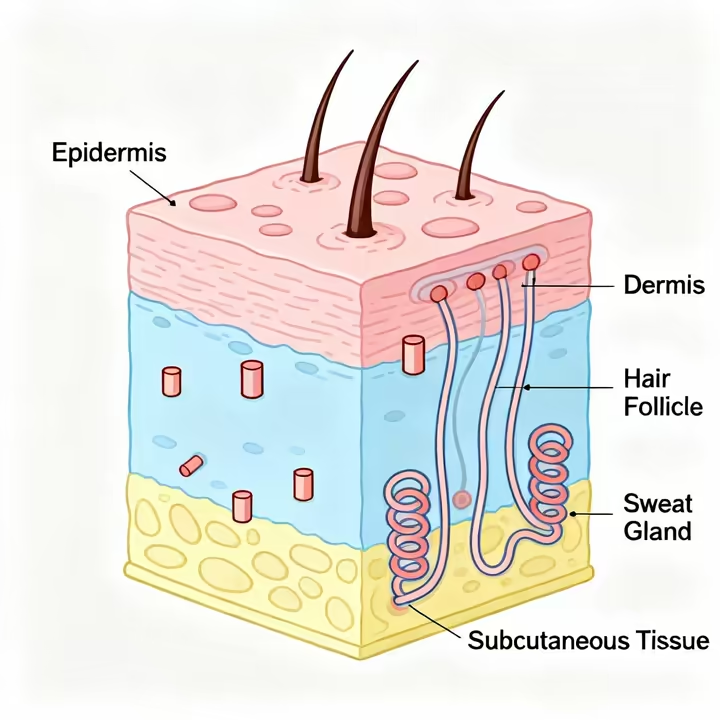
- First-Degree : This is the most common kind. It only affects the top layer, the epidermis. 3 Your skin will look red and feel tender, but it won't be broken or blistered. 3
- Second-Degree : This is more serious, damaging both the epidermis and the dermis below. 1 The skin will look bright red, shiny, and wet, and it will be very painful because nerve endings are exposed. 2
- Third-Degree : This is extremely rare in pole dancing. The wound may look white, brown, or black and might not hurt at all because the nerves are destroyed. 1 This is a medical emergency, so get professional help immediately. 2
Burns vs. "Pole Kisses" vs. Blisters
Dancers get all sorts of marks, but they aren't all the same.
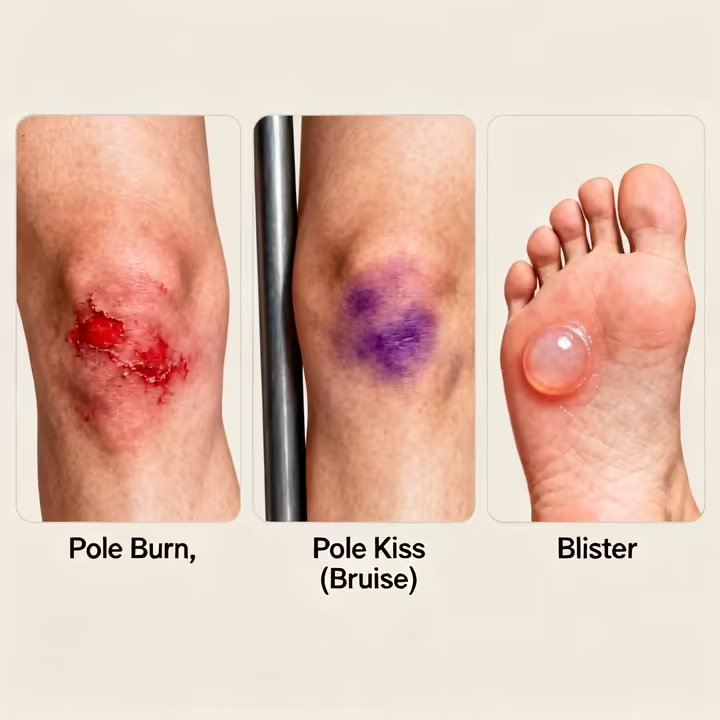
- Pole Burn : Caused by rubbing and sliding skin. It's a friction burn. 5
- Bruises ("Pole Kisses") : Caused by intense pressure or impact, like in a pole sit. The pressure breaks tiny blood vessels under the skin. 5
- Friction Blisters : Caused by repeated rubbing that separates the top skin layers, which then fill with fluid. 6 They're most common on hands and feet. 6
Could It Be an Allergy?
Sometimes, a red, itchy patch isn't a burn at all, it's an allergic reaction called contact dermatitis. 10 The most common culprit is a nickel allergy, since nickel is used to plate standard chrome poles. 10
An allergic rash is often intensely itchy, while a friction burn usually feels raw and stings. 2 If you get a persistent, super-itchy rash after using chrome poles, you might want to see a dermatologist to check for a nickel allergy.
| Guide to Pole Burn Severity | |||
|---|---|---|---|
| Degree | Appearance & Sensation | Skin Layers Affected | Recommended Action |
| First-Degree | Red, tender skin. Feels like a mild sunburn. No blisters or broken skin. | Epidermis (outermost layer) | Manage at home with basic first aid and after-care. |
| Second-Degree | Bright red, shiny, wet appearance. Painful to the touch. Blisters may form. | Epidermis and Dermis | Manage small burns at home. Seek medical advice for burns larger than your hand or on sensitive areas. |
| Third-Degree | White, yellow, brown, or black appearance. Leathery or waxy texture. Often painless due to nerve damage. | Epidermis, Dermis, and Subcutaneous Tissue (all layers) | Medical Emergency. Seek immediate professional medical attention. |
How to Prevent Pole Burn
Prep Your Skin
Healthy skin is your best friend. It grips better and doesn't tear as easily.
- Moisturize on Off Days : Well-hydrated skin is more flexible. 5 But never, ever moisturize on a training day, it's dangerous and makes the pole slippery for everyone. 11
- Exfoliate Gently : Once or twice a week is plenty. This removes dead skin cells and improves your natural grip. 12 Don't overdo it, or you'll leave skin raw and vulnerable.
- Time Your Shave : Shaving can make skin sensitive. Try not to shave your legs or other contact points right before a pole session.
Gearing Up
What you wear, and what the pole is made of, matters a lot.
- Apparel : The standard outfit is shorts and a sports bra for a reason, you need that skin-to-pole contact for grip. 13 "Grippy" leggings with silicone patterns can protect sensitive spots while you're learning a new move, but don't rely on them forever. 15
- Pole Finishes : Different pole materials have different levels of grip. This affects your risk of burns.

| Comparison of Common Pole Finishes | ||||
|---|---|---|---|---|
| Finish Type | Relative Grip/Friction | Pros | Cons | Best For... |
| Chrome | Medium | Industry standard; versatile for spins and holds. | Contains nickel, a common allergen; can become slippery with sweat. | All-around studio and competition use for dancers without metal allergies. |
| Stainless Steel | Low-Medium | Hypoallergenic (nickel-free); very durable. | Less grippy than chrome, requiring more strength; can be slippery in cold conditions. | Dancers with nickel allergies; commercial studios with high usage. |
| Brass | High | Excellent grip, especially in hot/humid climates; hypoallergenic. | Can become too sticky, making slides difficult; requires more maintenance. | Dancers in warm climates or those who need maximum natural grip. |
| Powder Coat | Very High | Excellent grip for those with sweaty hands or grip issues. | Can be rough on the skin; makes spins and slides very difficult. | Dancers who struggle significantly with grip on standard metal poles. |
| Silicone | Extremely High | Ultimate grip; allows training while fully clothed. | High risk of severe friction burns during any sliding motion; limits move vocabulary. | Absolute beginners building foundational strength; specialized performance art. |
Finding the Right Grip
The goal is optimal friction, not maximum grip. Too little and you slide, too much and your skin can stick and tear.
- Grip Aids : These products mostly work by controlling sweat with alcohol or chalk. 19 They are tools to help you find that perfect level of grip, not a substitute for building strength.
- The "Sweet Spot" : The best natural grip happens when your skin is warm and slightly dewy, but not yet sweaty. 17 A thorough warm-up is the best way to get there. 5
Train Smart
Smart training habits are the best injury prevention.
- Warm-Up and Cool-Down : No excuses. A warm-up makes your skin and muscles more resilient. 5 A cool-down helps with recovery. 5
- Technique Over Tenacity : Focus on proper form. Good technique uses engaged muscles to hold you up, rather than just painfully pinching your skin. 16
- Pace Yourself : It's tempting to rush, but your skin and muscles need time to adapt and get stronger. 5 Listen to your body, rest when you need to, and respect the process. 15
What to Do in the Moment
The Golden Rules of Burn First Aid
If you get a burn that's more than just a little red, follow these steps as soon as you can after training.
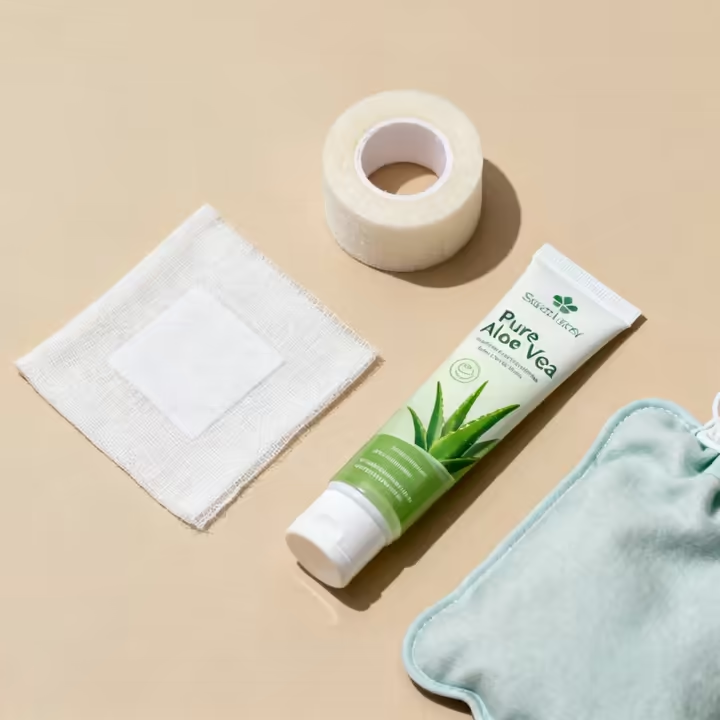
- Step 1, Cool the Burn : Run cool (not ice-cold) water over the area for at least 10 minutes, ideally 20. 23 This relieves pain, reduces swelling, and stops the heat from damaging deeper tissues. Do not use ice, it can cause more damage like frostbite. 23
- Step 2, Clean Gently : If the skin is broken, wash the area with mild soap and lukewarm water. 5 Don't scrub it. 27
- Step 3, Cover Loosely : Use a sterile, non-stick dressing to cover the burn. 24 This protects it from infection and reduces pain by keeping air off the exposed nerve endings. 23
Mid-Session Fixes
During class, you can't always do the full first-aid routine. Here are some quick tricks.
- Immediate Cooling : Apply a cold compress (like an ice pack wrapped in a towel) for 10-15 minutes between attempts. This can numb the pain and reduce inflammation. 5
- Soothing Gels : A dab of pure aloe vera gel can feel amazing. It's cooling and has anti-inflammatory properties. 5
- Rest and Rotate : Give the burned spot a break. Practice the move on your other side, or switch to a move that uses different contact points. 15
To Continue or To Stop?
Deciding whether to stop a move is about managing risk and staying safe, not just about your pain tolerance. Pain is a signal.
If the stinging from a burn is so intense that it distracts you from using proper form, you risk a much more serious injury, like a muscle strain or a fall. 30
Stop working on a move for the day if the pain is sharp or getting worse, the skin is broken or bleeding, or the discomfort is making you compromise your technique.
The Healing Process and After-Care
The Body's Repair Timeline
Your body has a predictable healing process. A minor, first-degree burn usually heals within a week, while a second-degree burn might take up to three weeks. 3, 24
First, the area gets red and swollen. 2 Then, a scab forms over any broken skin. As new skin grows underneath, it will get itchy, which is annoying but a good sign that things are healing. 2 Just try not to scratch it. 24
A Blueprint for Recovery
Consistent, gentle care is key.
- Cleaning : Gently clean the burn once a day with mild, fragrance-free soap and lukewarm water. 5 Pat it dry, don't rub.
- Ointments : Apply a thin layer of a protective ointment like basic petroleum jelly or pure aloe vera. 24 Avoid folk remedies like butter or toothpaste, they can trap heat and introduce bacteria. 23
- Dressing : Cover the burn with a sterile, non-stick gauze pad. Change the dressing every day, or if it gets wet or dirty. 24, 32
To Cover or Let it Breathe?
It's a myth that wounds need to "air out." Modern science shows that wounds heal faster in a moist environment. 33
Keeping a burn covered and moist prevents a hard scab from forming. This lets new skin cells move across the wound more easily, which speeds up healing, reduces pain, and minimizes scarring. 32
Key Ingredients for Skin Repair
Some ingredients in after-care products can really help rebuild your skin's barrier.
- Aloe Vera : Calms pain and redness with its anti-inflammatory and cooling properties. 5
- Ceramides : These fats are like the "mortar" between your skin cell "bricks." They help restore your skin's protective barrier. 38
- Panthenol (Pro-vitamin B5) : Hydrates skin, reduces inflammation, and helps create new connective tissue. 41
- Hyaluronic Acid (HA) : Holds onto water to keep the wound moist and helps signal cell regeneration. 44
- Lanolin : A great skin protectant that locks in moisture and soothes minor burns. 45
- Calendula : An extract from marigolds that has anti-inflammatory and antiseptic properties to help tissue regenerate. 48
Getting Your Skin (and Mind) Used to It
Building "Pole Skin"
The "pole skin" that experienced dancers have is a real thing. It’s a two-part adaptation. First, your nervous system gets used to the pressure and stops sending such loud pain signals. 17, 51
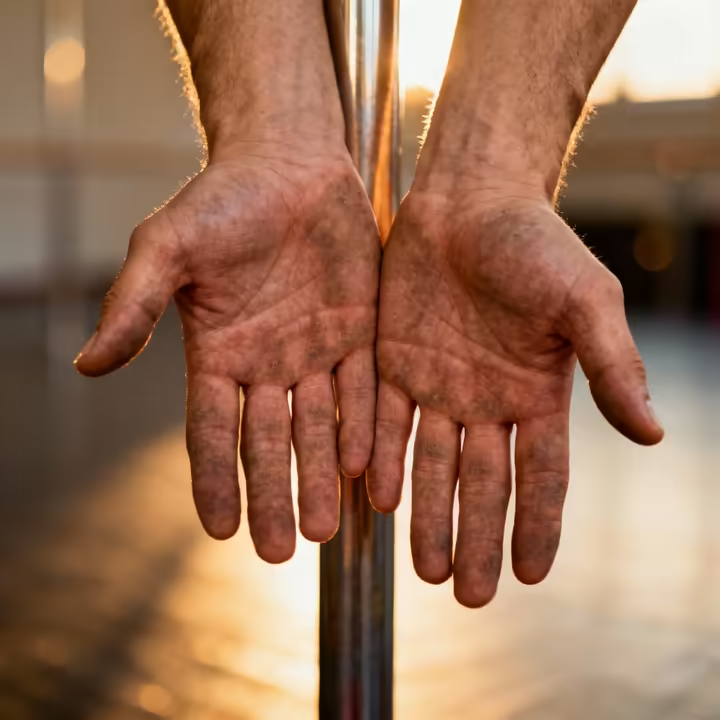
Second, your skin itself gets tougher. The top layer (epidermis) thickens in response to friction, forming protective calluses. 6 This is why a pole sit that's agony for a beginner can be held comfortably by an intermediate dancer.
Train Your Skin Like a Muscle
The best way to adapt is to apply the principle of "progressive overload," just like in strength training. 52 Instead of just gritting your teeth, build up your skin's tolerance slowly.
- Start with short holds : Practice a painful move like a pole sit for just 3-5 seconds at a time. Come down, rest, and repeat. 17 The goal is to stimulate the skin, not destroy it.
- Gradually increase time : The next week, try holding for 7-10 seconds. 54
- Increase frequency : As you build tolerance, practice the move more often, but make sure to take rest days for your skin to heal. 17
It's a Mental Game, Too
Pain tolerance is a trainable skill. Trained athletes have a higher pain tolerance because, through training, their bodies become more efficient at producing natural pain-dampening chemicals like endorphins. 55
Cognitive Strategies for Reframing Pain
You can manage discomfort by being mentally smarter, not just physically tougher.
- Cognitive Reframing : This is the most powerful tool. Change your inner monologue from, "This hurts, I have to stop," to, "This is the feeling of my skin adapting and getting stronger. This is progress". 57
- Mantras : Repeat a short, powerful phrase like "strong and steady" to keep your mind focused on something other than the pain. 57
- Chunking : Break down a long hold into smaller goals. Focus on holding for just "three more seconds" instead of an eternity. 57
- External Focus : Direct your attention to something outside your body, like the music, a spot on the wall, or the angle of your feet. 57
Move-Specific Hotspots and Targeted Solutions
A Map of Ouch: Common Hotspots
Pole burn is often a signal that you're relying too much on skin friction and not enough on muscle. Some spots are more likely to complain than others.
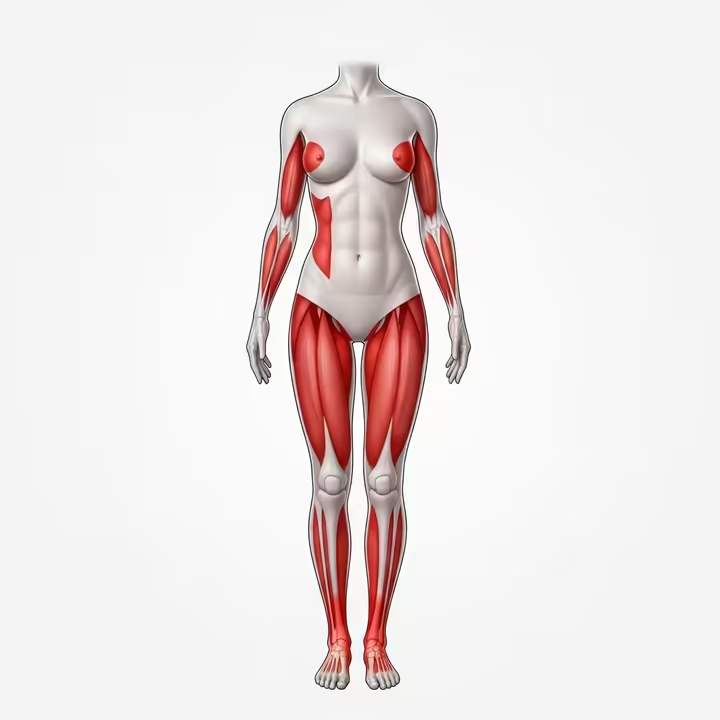
- Inner Thighs (sits, climbs)
- Inner Biceps and Upper Arms (climbs, holds)
- Armpits (armpit holds)
- Tops of the Feet and Shins (climbs)
- Waist and Side Body (side climbs)
Mastering the Sit: Protecting Your Inner Thighs
The pole sit is often the first big pain hurdle.
- The Challenge : Just pinching the pole with your skin is unstable and leads to bad burns.
- The Solution : Turn the sit from a passive pinch into an active, muscular lock.
- Squeeze your thighs together like you're trying to crush the pole. This muscle engagement (adduction) is where most of your holding power should come from. 54
- Tilt your hips to one side. Dropping one hip creates a secure "shelf" that distributes pressure, instead of focusing it all on your sensitive inner thigh skin. 62 Sitting straight up is a recipe for sliding and burning.
The Layback: Engaging Muscles to Reduce Strain
This move evolves from the pole sit and puts your thigh grip to the test.
- The Challenge : As you lean back, your skin can slide under the load, causing burns on your thighs and tailbone area. 64
- The Solution :
- Secure your leg grip BEFORE you lean back and release your hands. 54 Trying to adjust your legs mid-layback is a common cause of burns.
- Keep your thigh (adductor) and butt (glute) muscles squeezed the entire time. This stabilizes you and takes pressure off the skin. 65
- Move slowly and with control, both into and out of the move.
Grip-Intensive Holds: Armpits and Knee Pits
Gripping with other sensitive spots requires a similar focus on muscle, not just skin.
- The Challenge : The skin in your armpits and inner biceps is thin and delicate, making these grips intensely painful without proper support.
- The Solution :
- For armpit and bicep grips, engage your shoulder. Pull your shoulder blade down your back before you add your weight. This uses your big back muscles (lats) to support you, reducing the force on your skin. 66
- For a knee pit grip, actively flex your hamstring to "hook" the pole.
- Don't be afraid to use grippy leggings or arm bands while you're conditioning these sensitive areas. They let you practice the muscle engagement with less pain. 17
Red Flags: When to See a Doctor
Recognizing the Signs of Infection
Any break in the skin can let bacteria in. See a doctor if you notice any of these signs of infection.
- Spreading Redness : Redness around the wound starts to expand over hours or days. 2
- Increased Pain or Swelling : The pain gets worse after the first day or two instead of better. 24
- Pus or Oozing : Thick, cloudy, yellow, or green fluid draining from the wound. 6
- Foul Odor : Any bad smell coming from the wound. 2
- Fever or Streaks : You develop a fever, or see red streaks leading away from the burn. This is a sign the infection is spreading and needs immediate care. 2
Identifying Severe Burns
Some burns require professional care right away. Go to an urgent care clinic or emergency room if you see these signs.
- Third-Degree Burns : The burn looks white, black, brown, or yellow, or has a leathery texture. 2 These burns are often painless because the nerves are destroyed, which is a very bad sign. 1
- Size and Depth : Any second-degree burn (red, shiny, blistering) that is larger than the palm of your hand needs to be checked out. 72
- Location : Any burn on your face, neck, hands, feet, genitals, or over a major joint like a knee or elbow. 24
- Embedded Debris : The burn has dirt, gravel, or anything else stuck in it that you can't rinse out. 2
When to Consult a Doctor or Dermatologist
Not every situation is an emergency, but some things still warrant a doctor's visit.
- Slow Healing : A minor burn isn't showing signs of healing after several days of proper home care. 25
- Suspected Allergy : You experience persistent, intensely itchy rashes, especially after using chrome poles. A dermatologist can perform a patch test to check for a nickel allergy. 10
Conclusion
Pole burn is a normal part of learning, not a barrier. By understanding what it is, you can prevent it, treat it, and even use it as a tool.
Think of pole burn less as a random pain and more as useful feedback. It’s often a sign from your body to adjust your technique and engage your muscles more, rather than relying on skin alone. Now go train smart!
Works cited
- What Are the Types and Degrees of Burns? - WebMD, https://www.webmd.com/first-aid/types-degrees-burns
- What is a friction burn, and how do you treat it? | Burn and ..., https://burncenters.com/burns/burn-services/friction-burn/
- Causes of a Rug Burn and How It's Treated - Verywell Health, https://www.verywellhealth.com/rug-burns-overview-4174430
- Friction burn - Wikipedia, https://en.wikipedia.org/wiki/Friction_burn
- Dealing with Pole Burns and Bruises: Skin Care Tips for Experienced Po - Spincess, https://spincess.store/blogs/information/dealing-with-pole-burns-and-bruises-skin-care-tips-for-experienced-pole-dancers
- Friction blisters - DermNet, https://dermnetnz.org/topics/friction-blister
- Blisters | Better Health Channel, https://www.betterhealth.vic.gov.au/health/conditionsandtreatments/blisters
- Burn Blister vs Friction Blister - Blister Prevention - Rebecca Rushton, https://www.blister-prevention.com/blogs/treatment/burn-blister
- Pole Kiss: 5 natural solutions to reduce them in pole dance, https://www.laboutiquedupoledance.com/en-en/blogs/pole-dance/pole-kiss-5-solutions-naturelles-pour-les-attenuer-en-pole-dance
- rash from pole dancing | Poleitical Diaries, https://poleitical.com/tag/rash-from-pole-dancing/
- Lotion, Your Skin, and Pole Dancing | PolePedia Resource, https://polepedia.com/lotion-your-skin-and-pole-dancing/
- How to Create a Skincare Routine for Pole Dancers to Keep Skin Soft and Supple, https://polephysics.com/blog/how-to-create-a-skincare-routine-for-pole-dancers-to-keep-skin-soft-and-supple/
- The Ultimate Guide to Pole Dance Attire: What to Wear for Comfort, Safety, and Style, https://x-pole.co.uk/inspiration/the-ultimate-guide-to-pole-dance-attire-what-to-wear-for-comfort-safety-and-style/
- Pole Dance Grip Aids - Pole Physics, https://polephysics.com/pole-dance-grip-aids/
- Help with thigh skin protection : r/poledancing - Reddit, https://www.reddit.com/r/poledancing/comments/q4f13j/help_with_thigh_skin_protection/
- How to Avoid Pole Dancing Bruises? - 123poling, https://123poling.com/Pole-Dance-Knowledge-Base/how-to-avoid-pole-dancing-bruises/
- Prevent Pole Burn Pain & Bruising On The Skin While Pole Dancing, https://polefitnessdancing.com/building-strength-in-the-skin-to-execute-better-pole-dance-moves/
- Tatiana Active Wear | Shop Luxury Pole Wear Online, https://www.tatianaactive.com.au/
- The Ultimate Guide to Pole Fitness Grip: How Pole Physics Can Enhance Your Performance, https://polephysics.com/blog/ultimate-guide-pole-fitness-grip-enhance-your-performance/
- 10 Beginner Pole Dance Mistakes (How to Fix Them!) - YouTube, https://www.youtube.com/watch?v=dn51Emr50ZE
- 12 Common Beginner Pole Dancer Mistakes - 123poling, https://123poling.com/12-common-beginner-pole-dancer-mistakes/
- Pole Dance and Injury Prevention: Common injuries with pole dance and how to prevent them - Aerial Fifty Two, https://aerialfiftytwo.com/2023/10/24/pole-dance-and-injury-prevention-common-injuries-with-pole-dance-and-how-to-prevent-them/
- Learn first aid for burns | British Red Cross, https://www.redcross.org.uk/first-aid/learn-first-aid/burns
- Minor burns - aftercare: MedlinePlus Medical Encyclopedia, https://medlineplus.gov/ency/patientinstructions/000662.htm
- Burns: Symptoms, Degrees, How To Treat & Healing - Cleveland Clinic, https://my.clevelandclinic.org/health/diseases/12063-burns
- Friction Burn Causes & Treatment - Cleveland Clinic, https://my.clevelandclinic.org/health/diseases/friction-burn
- Home remedies for burns and scalds - Medical News Today, https://www.medicalnewstoday.com/articles/319768
- my.clevelandclinic.org, https://my.clevelandclinic.org/health/diseases/friction-burn#:~:text=First%20aid%20for%20most%20friction,sterile%20bandage%20or%20clean%20cloth.
- Healing up pole burns quickly? Or how to keep training w/o exacerbating pole burn? - Reddit, https://www.reddit.com/r/poledancing/comments/lalu7p/healing_up_pole_burns_quickly_or_how_to_keep/
- The Complete Guide To Pole Dancing Muscle Injuries, https://lovepolekisses.com/training-safely/pole-dancing-muscle-injuries/
- Pole injuries common? : r/poledancing - Reddit, https://www.reddit.com/r/poledancing/comments/1d6htp3/pole_injuries_common/
- What is the management of abrasions (friction burns) at home? - Dr.Oracle AI, https://www.droracle.ai/articles/90604/friction-burn-management-at-home-
- Burn bandages and dressings | Regions Hospital Burn Center, https://www.healthpartners.com/care/hospitals/regions/specialties/burn-center/bandages/
- Treating Burns at Home: Types & Tips | BAND-AID® Brand, https://www.band-aid.com/first-aid-info/first-aid-basics/how-to-treat-burns
- Burns - The Royal Children's Hospital, https://www.rch.org.au/uploadedFiles/Main/Content/rchcpg/Wound_management_Link_5C.pdf
- starkvilleurgentcareclinic.com, https://starkvilleurgentcareclinic.com/burn-relief-guide-5-quick-tips-for-home-treatment/#:~:text=Aloe%20Vera%20is%20effective%20in,from%20an%20aloe%20vera%20plant.
- 3 Home Remedies for Burns That Actually Work - Verywell Health, https://www.verywellhealth.com/burn-remedies-89945
- What Are Ceramides? Benefits, Side Effects, Usage, More - Everyday Health, https://www.everydayhealth.com/healthy-skin/ceramides/guide/
- Understanding The Role Of Ceramides In Barrier Protection - Simple Skincare, https://www.simpleskincare.in/blogs/tips/the-role-of-ceramides-in-barrier-care
- What to Know About Ceramides for Skin - WebMD, https://www.webmd.com/beauty/what-to-know-about-ceramides-for-skin
- www.medicalnewstoday.com, https://www.medicalnewstoday.com/articles/panthenol#:~:text=Panthenol%20is%20a%20common%20ingredient%20in%20wound%20healing%20therapies%20and,cell%20turnover%20and%20fibroblast%20proliferation.
- 5 Benefits of Panthenol for Your Skin| Neutrogena®, https://www.neutrogena-me.com/beauty-and-skincare-tips/skincare/five-benefits-of-panthenol
- Dexpanthenol - EUCERIN, https://int.eucerin.com/our-research/ingredients/d/dexpanthenol
- Wide Use of Hyaluronic Acid in the Process of Wound Healing—A Rapid Review - MDPI, https://www.mdpi.com/2218-0532/92/2/23
- Lanolin Ointment: Uses & Side Effects - Cleveland Clinic, https://my.clevelandclinic.org/health/drugs/20901-lanolin-topical-ointment
- The Soothing Power of Lanolin: A Natural Remedy for Burns, https://www.nznaturally.nz/blogs/news/the-soothing-power-of-lanolin-a-natural-remedy-for-burns
- Lanolin: Skin Uses, Warnings, Side Effects, Dosage - MedicineNet, https://www.medicinenet.com/lanolin/article.htm
- Choose Calendula for Skin Health | American College of Healthcare Sciences, https://achs.edu/blog/calendula-for-skin-health/
- What Does Calendula Do For Skin? 5 Calendula Skin Care Benefits - Naturopathica, https://www.naturopathica.com/blogs/news/calendula-skin-care-benefits
- www.medicalnewstoday.com, https://www.medicalnewstoday.com/articles/calendula-and-eczema#:~:text=Benefits%20of%20calendula,which%20can%20have%20antiseptic%20properties
- Does Pole Dancing Stop Hurting (Hint: Yes!) | Learn how with ..., https://polepedia.com/does-pole-dancing-stop-hurting/
- Progressive Overload: The Secret to Building Muscle Strength - University Hospitals, https://www.uhhospitals.org/blog/articles/2025/08/progressive-overload
- What Is Progressive Overload? - WebMD, https://www.webmd.com/fitness-exercise/progressive-overload
- Pain with the Pole Sit - StudioVeena.Com, https://www.studioveena.com/discuss/discussion/Pain_with_the_Pole_Sit_20130722095750/
- Pain Threshold Variations in Athletes Explained by Riverside Sports Therapy, https://www.riversidesportstherapy.com/2025/05/05/pain-threshold-variations-in-athletes-explained-by-riverside-sports-therapy/
- Neural mechanisms of pain processing differ between endurance athletes and nonathletes: A functional connectivity magnetic resonance imaging study - PMC - PubMed Central, https://pmc.ncbi.nlm.nih.gov/articles/PMC8596969/
- The Science of Suffering: How Endurance Athletes Cope with Pain | FLJUGA MIND, https://www.fljuga.co.uk/fljuga-mind/endurance-athlete-pain-coping
- Reframing Emotions in Sport - Pina Performance Coaching, https://pinaperformancecoaching.com/blog/reframing-emotions-in-sport
- Diagnose & Treat - Triumphs Over Rehabilitation Thinking Traps - Sports Injury Bulletin, https://www.sportsinjurybulletin.com/diagnose--treat/triumphs-over-rehabilitation-thinking-traps
- 3 Mental Training Tips for Increasing Your Pain Endurance - TrainingPeaks, https://www.trainingpeaks.com/blog/3-mental-training-tips-for-getting-better-at-dealing-with-pain/
- Sports-Injury Recovery Through Psychological Interventions - BYU ScholarsArchive, https://scholarsarchive.byu.edu/cgi/viewcontent.cgi?article=1426&context=intuition
- skin irritation + "cheating" sits and climbs. how do i get my legs to do the thing?? - Reddit, https://www.reddit.com/r/poledancing/comments/18dauie/skin_irritation_cheating_sits_and_climbs_how_do_i/
- Pole Sit Tips? : r/poledancing - Reddit, https://www.reddit.com/r/poledancing/comments/zya9kw/pole_sit_tips/
- (Learn) Cross Knee Layback | PolePedia Pole Move Dictionary, https://polepedia.com/moves/cross-knee-layback/
- Laying down the layback - The Pole PT, https://www.thepolept.com/pole-anatomy/layback-pole-anatomy/
- Bruising and friction burns : r/poledancing - Reddit, https://www.reddit.com/r/poledancing/comments/ipo3ks/bruising_and_friction_burns/
- Divinity Polewear | Elegance meets functionality. | Pole Dancing, https://divinitypolewear.com/
- Friction Burn: What It Is, Treatment, and How to Prevent It - Safety Management Group, https://safetymanagementgroup.com/blog/friction-burn/
- Friction Blisters: Causes, Treatment, Prevention - Health, https://www.health.com/condition/skin-conditions/friction-blister
- Intertrigo: What Is It, Causes, Symptoms & Treatment - Cleveland Clinic, https://my.clevelandclinic.org/health/diseases/21693-intertrigo
- Pressure Injuries | Johns Hopkins Medicine, https://www.hopkinsmedicine.org/health/conditions-and-diseases/pressure-injuries
- Burns and scalds - NHS, https://www.nhs.uk/conditions/burns-and-scalds/
- Treating Friction Burns & When to Seek Care | Coastal, https://coastaluc.com/health-blog/how-to-treat-a-friction-burn-and-when-you-should-go-to-the-hospital/
- my.clevelandclinic.org, https://my.clevelandclinic.org/health/diseases/friction-burn#:~:text=You%20can%20also%20usually%20self,burn%20or%20think%20you%20might
- Common Sports Skin Conditions | Skin Care Network, https://www.skincarenetwork.co.uk/dermatology/sports/conditions/