Studio or Home Pole? Your First Big Decision
So you’ve decided to try pole dancing. High five! It’s a mix of sport, art, and feeling like a superhero. But your first big choice isn't what spin to learn, it's where to learn. In a class full of people, or on your own at home? Let's figure out which is right for you.
Learning the Ropes (Or, uh, the Pole)
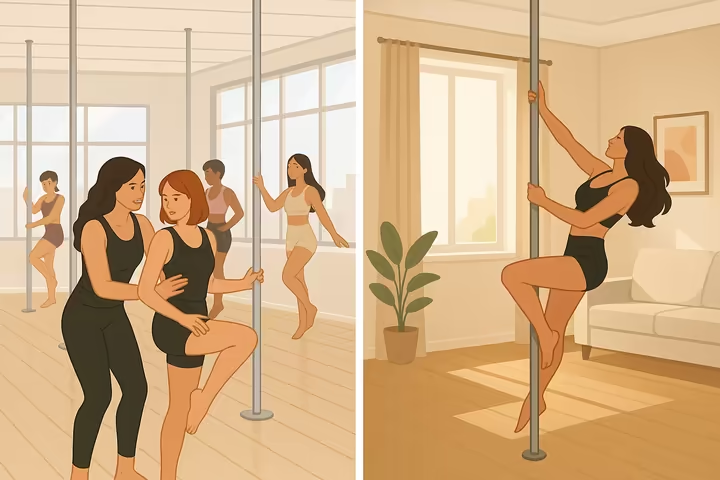
How you learn pole is totally different in a studio versus at home. One way has a teacher and a schedule, the other has... well, you. Let's look at how you'll progress in each.
Studio Life: Learning with a Crew
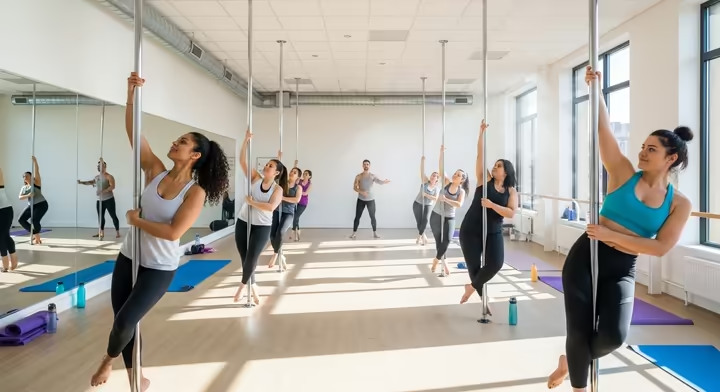
The most common way to start is by walking into a pole studio. They have a set structure and you'll be learning with a group of other newbies.
Class Format & Length
A standard class is usually 60 to 75 minutes long. This time is broken down into a non-negotiable warm-up, the main part of the class where you learn tricks, and a cool-down to stretch. 4, 5 Heads up, in a 60-minute class, the actual time you spend on the pole might only be around 40 minutes. If you have to share poles, which is common, you could get as little as 20 minutes of hands-on time. 4
Student-to-Instructor Ratios
Ideally, a class would have just a few students, but studios need to pay the bills. You can expect a class size of 6 to 10 students per instructor. 4 This means the teacher gives group instructions, but you won't get a ton of personal, one-on-one feedback.
The Curriculum Question
Studios provide a structured plan, which is great if you have no idea where to start. But here's the catch, the pole industry has no single, official syllabus. One expert described the situation as "pure chaos," meaning the quality and safety of what's being taught can vary wildly between studios. 7
Still, most beginner classes follow a similar path. You'll start by building strength with basic spins (like the Fireman), simple sits, and climbs. 7, 8 The next big goal is learning to go upside down (an invert), which can take months of conditioning your abs and arms. 7 Once you can safely invert, you move on to intermediate moves like leg hangs and the Butterfly. 7
The Instructor's Role
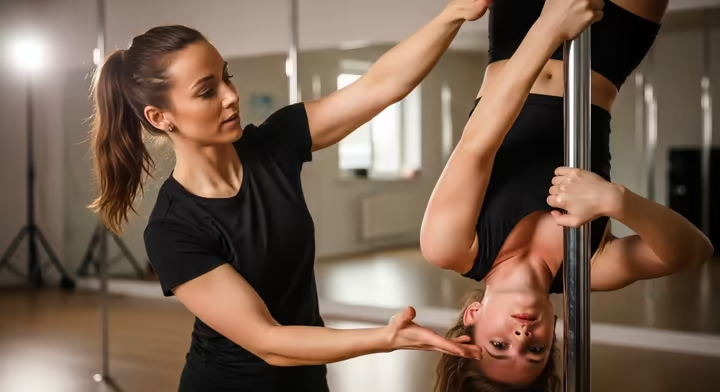
A good instructor is the most important part of a group class. They demonstrate moves, give simpler and harder versions for different skill levels, and spot you (physically catch you) to keep you safe. 6 They plan the lesson, manage the time, and correct your technique. 6
Home Poling: You're the Boss
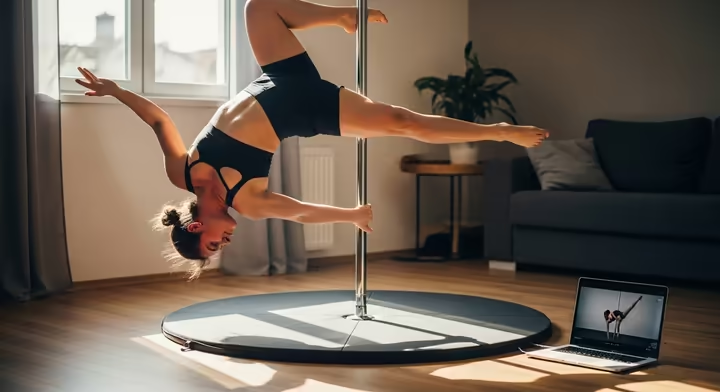
Learning at home means you're both the student and the teacher. It gives you a lot of freedom, but also a lot of responsibility.
Building Your Own Plan
When you learn at home, you have to create your own curriculum. While you can find random videos on YouTube, it's much safer to subscribe to a structured online program from a reputable school like Pole Dance Academy Online. 12, 13 These programs act like a studio curriculum, taking you through the basics in a logical order. 12
The Freedom and the Grind
The best part of home poling? Total freedom. You can practice whenever you want, for as long as you want. 12 The downside? It takes a lot of self-discipline to stick to a schedule, and you are the only one who can make sure you do a proper warm-up and cool-down every single time. 17
Common Mistakes
It's tempting to see an amazing, advanced trick on social media and want to try it right away. Don't. This is a fast track to getting seriously injured. 11 Another risk is developing bad habits, like learning to climb with a flexed foot instead of a pointed toe, which is less secure. 15 Without an instructor there to correct you, these mistakes can stick and make it harder to progress later. 11
So Which is Better for Learning?
The choice isn't just "studio vs. home," it's "good curriculum vs. bad curriculum." A great online course can be way better than a class at a disorganized studio. 7 The real question a beginner should ask is, "Which specific, high-quality curriculum will I follow?"
The biggest difference is feedback. In a studio, an instructor gives you real-time corrections, helping you build good muscle memory from day one. 11 At home, you have to film yourself and compare it to a video, which means you might practice a move the wrong way a few times before you even notice. 17 Because of this, getting at least a few in-person lessons at the very beginning is a really good idea for your long-term safety and progress.
Table 1: A Typical Beginner Pole Class
| Time | Activity | What's Happening | Evidence |
|---|---|---|---|
| 10-15 mins | Warm-Up | Getting your body ready to move with light cardio and dynamic stretches. A must-do to prevent injuries. | 4 |
| 10-15 mins | Conditioning | Building the specific strength you need for pole, like pull-ups and core exercises. This is how you get strong enough for inverts. | 6 |
| 20-40 mins | New Moves | The main event! Learning new spins, climbs, or sits. If you're sharing poles, you'll split this time between practice and rest. | 4 |
| 5-15 mins | Cool-Down | Slowing your heart rate down and stretching the muscles you just worked to help with recovery. | 5 |
How Not to Get Hurt
Pole dancing is a sport, and like any sport, you can get hurt. Bruises (we call them pole kisses), muscle strains, and falls can happen. 21 Managing these risks is your number one job as a beginner.
Safety in the Studio
A good studio is built around safety, creating a controlled space that minimizes risk for students.
Gear and Space
Studios use high-quality, commercial-grade poles that are installed by professionals and checked regularly. 22 They also make sure there's plenty of space around each pole so you don't spin into a wall or another person. 21 And of course, they have thick crash mats for when you're learning new or scary moves. 21
The Instructor as a Safety Net
One of the biggest safety perks of a studio is the instructor. A trained teacher can spot you, which means they physically support you and guide you to the ground safely if you lose your grip. 6 This is especially important when you're learning to go upside down and is something you just can't replicate when you're alone at home. 11
The Rules
Studios have rules for a reason. A big one is no lotion or body oil before class, it makes the pole dangerously slippery for everyone. 24 You'll also be told to take off rings and bracelets, which can damage the pole and hurt you. 24 Finally, the dress code, shorts and a tank top, is about safety, you need exposed skin to grip the pole. 22
Safety at Home: It's All On You
When you learn at home, you are 100% responsible for your own safety. This is a big deal and requires research and money.
The Pole Itself
- Good Brands Only: This is non-negotiable. You must buy a pole from a well-known, reputable brand like X-Pole, Lupit, or ThePole. 27 These companies test their products to make sure they won't break while you're upside down on them.
- The Danger of Cheap Poles: Do not, under any circumstances, buy a cheap, no-name pole from a site like Amazon or eBay. 26 Experienced polers will tell you, the money you save is not worth the risk of a trip to the emergency room or a huge hole in your ceiling. 29
- Pole Features: Most beginners start with a 45mm diameter pole. Different metal finishes like chrome or brass have different levels of grip. 28
Installation & Upkeep
A great pole is only safe if it's installed correctly. For tension poles (the kind that don't screw into the ceiling), you must place it under a structural ceiling joist, not just plain drywall. 30 Paying a professional to install it is highly recommended. You also need to check it regularly to make sure it's still tight and secure. 17
Must-Have Accessories
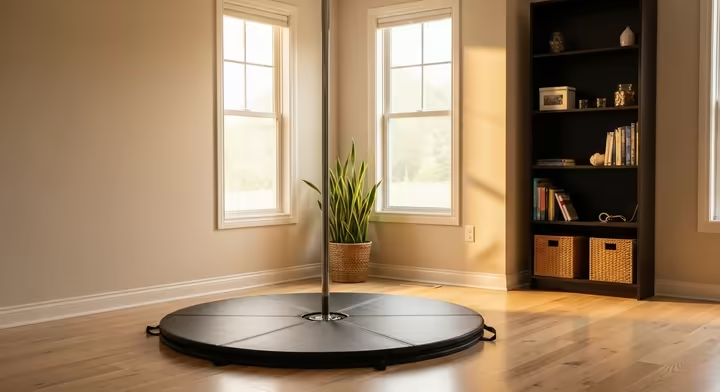
A crash mat is not an optional accessory for a home poler, you absolutely need one, especially when you start learning inverts. 21 You also need to keep the area around your pole clear of furniture, pets, or any other hazards. 32
Physical vs. Psychological Safety
When it comes to safety, there's a trade-off. The evidence is clear that a studio offers better physical safety. The professional equipment, crash mats, and a spotter create a safety net that's hard to match at home. 21
But safety isn't just about your body, it's about your mind, too. A great studio can feel like a safe haven, but a bad one with a judgy instructor or cliquey students can be psychologically damaging. 33, 34
In contrast, your home is a private sanctuary. It's a space where you can fail without an audience, which offers a lot of psychological safety. 12 So you have to choose which risk you're more willing to manage, the higher physical risk at home, or the potential psychological risk of a studio. This is about knowing yourself and what makes you feel anxious, a fall at home, or weird looks in a class? The answer will tell you where you'll learn best.
Table 2: Home Pole Safety Checklist
| Item/Action | Why It's a Must | Good Brands/Resources | Cost (Roughly) | Evidence |
|---|---|---|---|---|
| Buy a Quality Pole | So it doesn't break and drop you. Reputable brands are safety-tested. | X-Pole, Lupit, ThePole | $300 - $600+ | 27 |
| Professional Installation | Makes sure the pole is under a strong beam and won't fall down during use. | Local certified handymen | $125 - $250 | 11 |
| Get a Crash Mat | Gives you a soft place to land if you fall, especially when learning inverts. It's not optional. | X-Pole, Lupit, gymnastics suppliers | $150 - $400+ | 21 |
| Clear Your Space | You need at least a 5-6 foot clear circle around the pole so you don't hit anything when you spin. | N/A | $0 | 21 |
| Regular Checks | Poles can loosen over time. You have to check that it's tight and level. | Your pole's instruction manual | $0 | 17 |
| Buy Grip Aids | Helps you grip the pole better, reducing the risk of slipping, especially if you have sweaty hands. | Dry Hands, Tite Grip, iTac2 | $10 - $25 | 17 |
The Feels: Friends, Confidence, and Your Brain
Pole dancing is more than just a workout. It's also about how it makes you feel, who you meet, and the confidence you build along the way.
The Studio Vibe: Your 'Pole Fam'
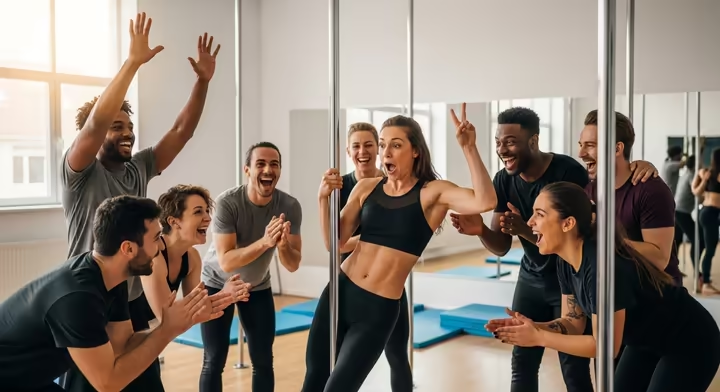
A pole studio is more than a gym, it's a community. You bond with people by struggling together, cheering for each other's victories, and laughing through the fails. 33 People often call their classmates their "pole family." 38
Safe Spaces & Inclusivity
A great studio works hard to create a safe space for everyone, regardless of body type, age, or gender. 33, 34 This means a strict no-judgment policy and a consent-based approach to spotting (your instructor should always ask before they touch you). 34 It’s a place where you can feel free to be yourself.
Good for Your Brain
Research shows that taking pole dance classes can boost your mental wellbeing and body appreciation. 43 The group environment seems to be a big part of it. Moving in sync with other people and sharing an experience builds a powerful feeling of connection. 43
The Home Vibe: Just You and the Pole
For some people, being alone is the best part. The home environment is a private sanctuary for personal growth.
Privacy and Comfort
The number one benefit of home poling is total privacy. If you have social anxiety or body confidence issues, your home is a judgment-free zone. 12 You can try a move, fall, and try again with no one watching. You can wear whatever you want, listen to your own music, and just dance for fun. 16
The Risk of Isolation
The biggest downside of poling at home is that it can be lonely. 46 The internet helps, but it doesn't fully replace the energy and friendship of an in-person class. 38 This isolation can sometimes hurt your motivation and make you feel disconnected from the larger pole world. 46
How to Stay Connected
If you're a home poler, you have to be proactive about finding your community. Join online pole groups on social media, take live-streamed classes, or consider a hybrid approach. 18, 13 A hybrid model, where you mostly practice at home but occasionally take a class at a studio, can be the perfect balance. 46
Two Ways to Build Confidence
Both paths can make you feel more confident and empowered. 47 But how you get that confidence is totally different.
In a studio, confidence is a social thing. It's built through public validation, peer support, and seeing that everyone else is struggling, too. When you finally nail a move and the whole class cheers, that's a powerful feeling. 38
At home, confidence is built from the inside. It comes from self-reliance and private achievement. When you finally master a trick after weeks of working on it alone, the validation comes entirely from you. This builds a unique kind of resilience that doesn't depend on anyone else's approval. 16
The Money Talk: How Much Does This Cost?
Let's be real, money is a huge factor. The two options have very different price tags, one is a recurring subscription, the other is a big one-time purchase.
Studio Costs: Pay-As-You-Go
Learning in a studio doesn't require a big upfront investment, which makes it an easy way to start.
How You Pay
Studios usually have a few pricing options. 49 You can pay for a single drop-in class (around $25-$35), buy a pack of 5 or 10 classes at a discount, or get a monthly membership for a set number of classes (e.g., $135/month) or unlimited access ($190-$235+/month). 50, 51
Home Costs: The Big Upfront Investment
The home pole path requires you to buy everything at the beginning, which can be a major barrier.
The Big Ticket Items
The pole itself is the biggest cost, a safe, high-quality one will run you $300 to $600. 28 Professional installation can be another $125 to $250. 30 A good crash mat is another essential, costing between $150 and $400. 21
Ongoing Costs
If you choose a structured online program, that will be an ongoing subscription cost. These can range from about $25 a month to a few hundred dollars for a complete course. 13
The Break-Even Point
So, which is actually cheaper in the long run? Home poling has a high initial cost but is almost free after that. Studio poling has a low startup cost but is a continuous monthly expense.
This means there's a "break-even point." After about 7 or 8 months of taking regular studio classes, you'll likely have spent more than you would have on a complete home setup.
If you know you're committed to pole for a year or more, investing in a home setup is the more economical choice. If you're just trying it out, the pay-as-you-go model of a studio is the smarter financial move.
Table 3: Cost Comparison: Studio vs. Home (1-Year Guess)
| Cost Item | Studio Learning (Estimate) | Home Learning (Estimate) |
|---|---|---|
| Upfront Investment | ||
| Reputable Pole | $0 | $450 |
| Pro Installation | $0 | $175 |
| Crash Mat | $0 | $250 |
| Total Upfront Cost | $0 | $875 |
| Ongoing Monthly Costs | ||
| Membership/Classes | $150 | $0 |
| Online Program | $0 | $25 |
| Total Monthly Cost | $150 | $25 |
| Cost after 12 Months | $1,800 | $1,175 |
| Break-Even Point | Around Month 7-8, the home setup becomes cheaper. | |
Note: These costs are just estimates to give you an idea. Actual prices will vary a lot.
Making Your Choice
Okay, let's put it all together. The best path for you depends entirely on your personality, goals, and budget.
The Hybrid Plan: A Bit of Both
An increasingly popular option is the hybrid model, which gives you the best of both worlds. 20 It often looks something like this, you start in a studio to learn the basics safely from a teacher. Once you feel comfortable, you buy a home pole for most of your practice. Then you still drop in for a class now and then to stay connected and learn new things in a spotted environment.
This approach solves the biggest problems of each path. You get the safety of starting in a studio and the long-term savings and convenience of practicing at home.
A Quick Quiz for Yourself
To figure out your best path, ask yourself a few honest questions.
- How do I learn best? Do you need to see things in person, or can you learn from a video you can pause and re-watch? 53
- What are my goals? Are you here for a great workout, or are you more interested in the dance and creative side of pole? 54
- What's my personality? Are you super disciplined, or do you need a scheduled class to make you show up? Are you an introvert who needs privacy or an extrovert who loves group energy? 16
- What am I more afraid of? The physical risk of falling while alone at home, or the psychological risk of feeling judged in a group class? Your answer is a huge clue. 3
So, Who Are You?
Based on all that, here are a few common beginner types and our recommendations.
- The Safety-First Social Butterfly: You love group energy and want an expert guide to keep you safe. Your biggest fear is getting hurt doing something wrong on your own. Recommendation: Start and probably stay at a good, friendly studio.
- The Budget-Conscious DIY-er: You're very disciplined, love learning on your own, and want a long-term, cheap way to practice. Recommendation: The home pole path is for you. But you MUST invest in a high-quality pole and crash mat and follow a good online program.
- The Anxious but Curious Explorer: You're intrigued by pole but feel intimidated by group classes. Your biggest fear is being watched or judged. Recommendation: The Hybrid Model is perfect. Start with a few private lessons to build confidence, then get a home pole for private practice.
- The Future Performer: You're drawn to the dance, flow, and artistry of pole. You want to learn choreography and maybe even perform someday. Recommendation: A studio is essential. It's where you'll find choreography classes, performance opportunities, and a community to cheer you on.
Ultimately, your pole journey is your own. The choice you make now isn't forever, you can always change your mind as you grow. The most important thing is to just begin, and to make sure you're being safe and having fun.
Table 4: Decision Helper: Studio or Home?
| Factor | Lean Towards a Studio If... | Lean Towards a Home Pole If... |
|---|---|---|
| Budget | You want a low startup cost and are fine with monthly fees. | You can afford a big upfront investment for long-term savings. |
| Safety | You want the security of a professional spotter and equipment. | You're diligent and comfortable managing your own safety protocols. |
| Comfort | You love group energy and are motivated by a community. | You have social anxiety and need privacy to feel comfortable. |
| Learning Style | You learn best from in-person feedback and demonstrations. | You learn well from videos and like to practice at your own pace. |
| Discipline | You need a scheduled class to stay motivated and consistent. | You're very self-disciplined and can stick to your own schedule. |
| Goals | You want to perform, learn complex choreography, or join a local community. | Your goals are mainly fitness, stress relief, or private expression. |
| Your Home | You live in a small space or are a renter who can't install a pole. | You have enough safe space with a secure ceiling for installation. |
Works cited
- Why is pole dancing considered a good exercise? - Quora, https://www.quora.com/Why-is-pole-dancing-considered-a-good-exercise
- Benefits of pole dancing - Lupit Pole, https://www.lupitpole.com/en/news/pole-dance/benefits-of-pole-dancing
- How to stay within your window of tolerance as a pole dance student ..., https://poleconvention.com/from-the-hbic/how-to-stay-within-your-window-of-tolerance-as-a-pole-dance-student/
- How to Structure Your Pole Dance Class (Part 1 of 3) - International ..., https://poleassociation.org/how-to-structure-your-pole-dance-class-part-1-of-3/
- Beginner Pole Tutorial | Learn How To Pole Dance - YouTube, https://www.youtube.com/watch?v=aAX9vzJ-dic
- How are your pole classes structured? : r/poledancing - Reddit, https://www.reddit.com/r/poledancing/comments/1hq3tmo/how_are_your_pole_classes_structured/
- Pole Curriculum: The ULTIMATE GUIDE to your Pole Journey • The ..., https://thepoledancer.com/tips/pole-curriculum-guide/
- What's your pole studio's curriculum like? What does beginner's pole consist of vs intermediate and advanced? I'm curious! - Reddit, https://www.reddit.com/r/poledancing/comments/2maljh/whats_your_pole_studios_curriculum_like_what_does/
- A Guide to Leveling Up at Essence Pole & Dance Studio, https://www.essencestudiopole.com/blog/nailthattrick-lc6jt
- Do instructors like teaching talented students more? : r/poledancing - Reddit, https://www.reddit.com/r/poledancing/comments/1cccbs2/do_instructors_like_teaching_talented_students/
- Is it safe to learn pole dance from zero from home? : r/poledancing - Reddit, https://www.reddit.com/r/poledancing/comments/1jrq8lv/is_it_safe_to_learn_pole_dance_from_zero_from_home/
- Can you really learn Pole Dancing at Home? - POLEPLACE, https://poleplace.com/can-you-really-learn-pole-dancing-at-home/
- Pole Dance Academy Online, https://www.poledanceacademyonline.com/
- Best Pole Dancing Classes Online - Open Dance Academy, https://www.opendance.academy/best_poledancing_classes_online/
- 7 Beginner Pole Dance Mistakes (and how to FIX them) - YouTube, https://www.youtube.com/watch?v=2mmeB8olNZQ
- Pros & Cons of Having a Pole at Home - PoleFreaks, https://www.polefreaks.com/pros-cons-pole-home/
- 12 Common Beginner Pole Dancer Mistakes - 123poling, https://123poling.com/12-common-beginner-pole-dancer-mistakes/
- Practical Tips & Motivation: A Guide On The Art Of Training At Home ..., https://irishpoledanceacademy.com/pole-dancing-at-home-tips-and-motivation/
- 9 Perks of Private Pole Training - The Pole Room, https://thepoleroom.com.au/2023/06/21/9-perks-of-private-pole-training/
- These bothered me for so long and I'm SO glad to get them fixed We re... | Calisthenics | TikTok, https://www.tiktok.com/@hybridcalisthenics/video/7534829351636847927
- Is Pole Dancing Safe? A Comprehensive Guide to Safety in Pole ..., https://spincess.store/blogs/information/is-pole-dancing-safe-a-comprehensive-guide-to-safety-in-pole-dancing
- FAQ + Policies — Pole + Dance Studios, https://www.poleanddancestudios.com/faqpolicies
- Safety First: Navigating the Art of Pole Dancing with Confidence - studio X presents, https://www.studioxpresents.com/sxp-blog/2023/12/28/safety-first-navigating-the-art-of-pole-dancing-with-confidence
- 10 Safety Rules for Pole Dancing - Super Fly Honey Sticky Pole Wear, https://www.superflyhoney.com/blogs/essentials/10-safety-rules-for-pole-dancing
- Pole dance: polici and rules in class - StudioVeena.Com, https://www.studioveena.com/discuss/discussion/Pole_dance_polici_and_rules_in_class_20111007113359/
- Everything you need to know before ... - Exotic Dance Academy, https://exoticacademy.com/start-pole-dancing-at-home/
- www.polefitnessdancingshop.com, https://www.polefitnessdancingshop.com/how-to-choose/#:~:text=There%20are%20cheaper%20Brand%20Name,great%20companies%20with%20individual%20differences.
- Ultimate 2025 Guide to Buying a Pole - Pole Movebook, https://polemovebook.com/poleguide
- recommendations for budget friendly at home poles? : r/poledancing, https://www.reddit.com/r/poledancing/comments/1hvl86l/recommendations_for_budget_friendly_at_home_poles/
- Prices/Store - Pole Installation, https://setupmydancepole.com/prices%2Fstore
- Pole Maintenance and Inspection - United Lighting Standards, https://unitedlightingstandards.com/info/pole-maintenance-and-inspection/
- Training in the pole studio vs training at home - Chrome Chronicles, https://chromechroniclespole.com/2020/09/29/training-in-the-pole-studio-vs-training-at-home/
- Nurturing Connections: The Unseen Treasures of the Pole Dancing ..., https://www.studioxpresents.com/sxp-blog/2023/12/28/nurturing-connections-the-unseen-treasures-of-the-pole-dancing-community
- What makes a pole dance studio a safe space? - Blogger On Pole, https://bloggeronpole.com/2023/01/what-makes-a-pole-dance-studio-a-safe-space/
- Overcoming Insecurities in Pole Dance - Gravity Arts, https://gravityarts.ch/overcoming-insecurities/
- The 14 Best Pole Dancing for Beginners Tips: Dance Smarter, Not Harder - PolePedia, https://polepedia.com/pole-dancing-for-beginners-tips/
- Group Fitness: Benefits of Small Class Sizes - CoCreate Pole Fitness, https://www.cocreatepolefitness.com/post/the-benefits-of-small-group-training-for-pole-dance
- Exploring the Social Scene of the Pole Dancing Community ..., https://www.achievepolestudio.com.au/exploring-the-social-scene-of-the-pole-dancing-community/
- Something You Never Thought You'd Try: Smokestack Goes Pole Dancing, https://kitsapsmokestack.org/2024/01/05/something-you-never-thought-youd-try-smokestack-goes-pole-dancing/
- How Zensual Dance Fitness Fosters a Supportive Community in Pole Dancing, https://zensualdance.com/how-zensual-dance-fitness-fosters-a-supportive-community-in-pole-dancing/
- Creating Inclusive Spaces in Pole Dance - Pole Teacher Training, https://www.poleteachertraining.com/blog/creating-inclusive-spaces-in-pole-dance
- The Impact of Unity: How Community Strengthens the Pole Dance World - THE|BAR, https://www.the-bar.co/post/the-impact-of-unity-how-community-strengthens-the-pole-dance-world
- Effects of pole dance on mental wellbeing and the sexual self ..., https://pmc.ncbi.nlm.nih.gov/articles/PMC10503020/
- Exploring the psychological and physiological outcomes of recreational pole dancing: a feasibility study | Circus: Arts, Life, and Sciences - Michigan Publishing, https://journals.publishing.umich.edu/circus/article/id/2801/
- Pole dancing classes boost women's mental wellbeing, study finds - PsyPost, https://www.psypost.org/pole-dancing-classes-boost-womens-mental-wellbeing-study-finds/
- Isolation from the pole community - advice? : r/poledancing - Reddit, https://www.reddit.com/r/poledancing/comments/1gq8lxi/isolation_from_the_pole_community_advice/
- How Pole Dancing Improves Your Mental Health - X-Pole, http://xpoleus.com/2024/09/13/how-pole-dancing-improves-your-mental-health/
- Pole dancing and YOUR confidence | Diamond Dance, https://diamondpoledance.com.au/pole-dancing-and-your-confidence/
- Offerings and Pricing | Pole Dancing Classes | Miss Pole, https://misspole.com/offerings-and-pricing/
- Welcome Babe! - Studio Goddess, https://www.studiogoddess.com/newbabes.html
- Pricing Pole Dance Classes Atlanta & Aerial Classes Atlanta ..., https://www.polelateaz.com/drop-in-pricing
- Hybrid Elements - by Lisette Krol - Pole Dance Classes, https://www.opendance.academy/course/hybrid-elements-by-lisette-krol/
- Learning How You Learn (Can Help You Pole Dance) PolePedia, https://polepedia.com/learning-how-you-learn/
- Pole Fitness Vs Pole Dancing: Differences & Fitness Benefits, https://polatesperth.com/post/pole-fitness-vs-pole-dancing/
- Pole Fitness vs Pole Dancing | What's the Difference? - Aerial Active, https://aerialactive.co.uk/pole-fitness-vs-pole-dancing-whats-the-difference/