Why Is Everyone Suddenly Pole Dancing?
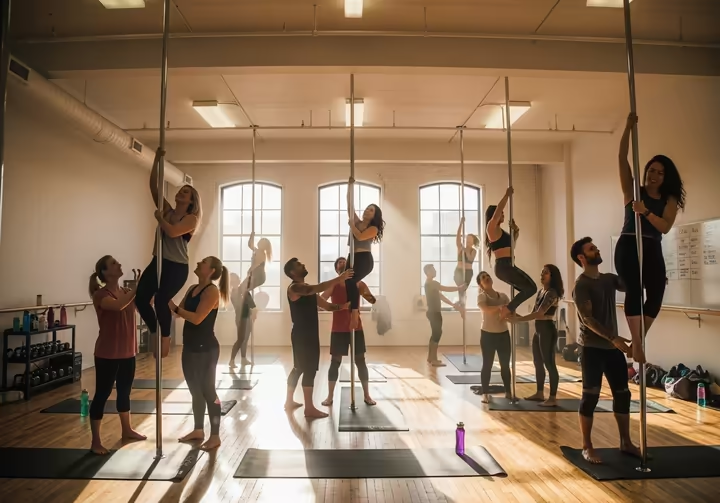
Pole dancing has gone through a massive glow-up. For years it was stuck in the shadows, linked to seedy clubs and burlesque shows. Now? It’s everywhere, in sunny studios from London to Los Angeles, practiced by all kinds of people. This is the story of how a misunderstood art form became a legit sport and a huge source of confidence.
Pole's Weird History
Ancient Muscle Men
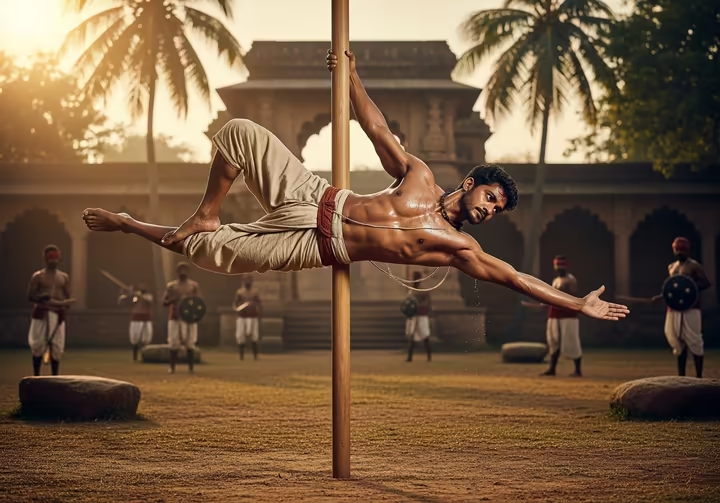
Think pole dancing started in a strip club? Think again. The story is way older and weirder, starting almost 1,000 years ago with dudes showing off their strength. 1 In 12th century India, warriors trained using a sport called Mallakhamb, which means "wrestler of the pole." 3 It was a mix of gymnastics, yoga, and martial arts on a thick wooden pole to build insane strength and agility. 3
Around the same time, Chinese circus acrobats used tall poles - sometimes two of them reaching up to thirty feet high - to perform wild, gravity-defying tricks. 2, 3 For these guys, the pole was a tool for peak athletic performance. Nothing sensual about it... yet.
The Circus & Burlesque Era
Things got a little spicier in the 1920s in America. 1 Traveling fairs had "Hoochie Coochie" dancers who performed sensual, belly dance-style shows to attract crowds. 7 To make their acts more interesting, they started using the tent poles in their routines to spin and slide around. 3
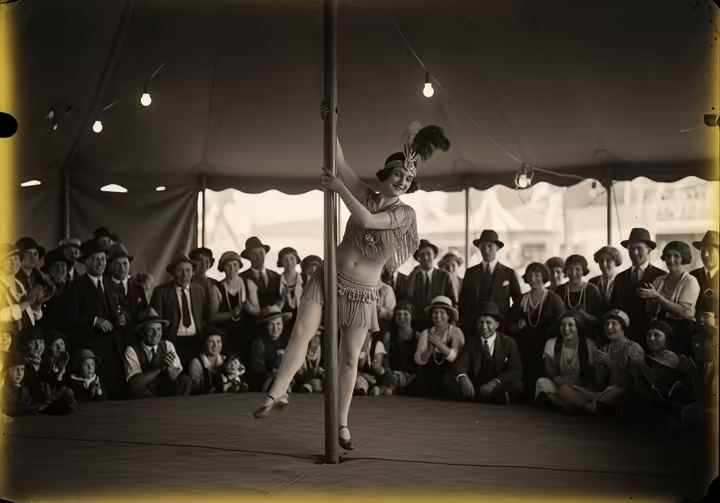
This was a turning point. The pole was becoming a prop for female sensuality, performed for a paying audience. 7 By the 1950s, the practice moved into bars and burlesque clubs, and by the 60s, it was a staple in modern strip clubs, which is where the stigma really took hold. 3
The Fitness Revolution
The real change happened in the 1990s, when pioneering women saw the pole as an amazing fitness tool. 1 A Canadian dancer named Fawnia Mondey is credited as the first person to teach pole dancing to the general public, not just strippers. 3 Then, in the early 2000s, actress Sheila Kelley opened her S-Factor studios and cleverly branded it "pole fitness," selling it as a fun, empowering workout. 7
This flipped the script. The focus moved from an audience's gaze to the dancer's own experience, their own strength and progress.
So the pole's story came full circle. It started with men's strength, was reframed as female sensuality, and is now an inclusive sport for everyone, all genders welcome. 10 This has caused some debate online (#notastripper vs. #yesastripper), as the fitness world tried to distance itself from its strip club roots, where many moves were invented by sex workers, especially Black women. 12
So... Is It a Good Workout?
Building Serious Strength
Yes. It's an incredible workout because it combines multiple types of training at once. It's a full-body strength workout using your own body weight, which is one of the best ways to get strong. 14, 15 You’re constantly using almost every muscle in your body.
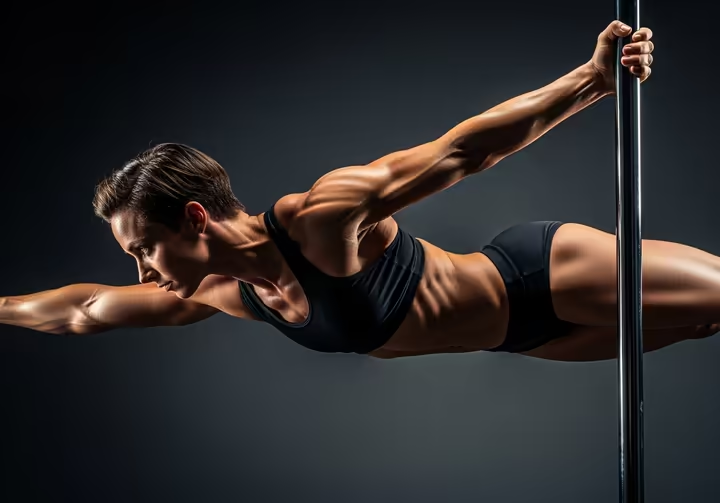
Pole uses two types of muscle work. When you hold a pose (like a "pole sit"), you're doing an isometric contraction, where muscles are tense but not moving, building endurance. When you climb or spin, that's an isotonic contraction, where muscles shorten and lengthen to create movement, building dynamic strength. 16, 17
People often ask, "Do I need to be strong or flexible to start?" Nope. Strength and flexibility are what you get from doing pole, not what you need to begin. 19 Beginner classes start with simple spins and exercises that build the grip and core strength you'll need for fancier tricks later. The journey itself makes you an athlete.
More Than Just Muscles
Pole is also a killer cardio workout. 15 Stringing moves together into a three-minute routine can leave you breathless, getting your heart rate up just like a good run. 14 The mix of muscle-building and calorie-burning makes it great for changing your body composition. 15
It also massively improves your flexibility and your proprioception, which is your brain's sense of where your body is in space. 15 Figuring out how to hang upside down rewires your brain, improving your balance and coordination in everyday life. 15 But the real secret is that it's fun. You're not just doing another rep, you're trying to nail a cool move like the "butterfly." That sense of achievement is addictive in a way a treadmill just... isn't. 20
The Brain Gains
The physical results are cool, but the mental shift is why most people stick with pole. The studio becomes a place for a total mental and emotional makeover. Learning to lift yourself up on a pole builds serious self-worth.
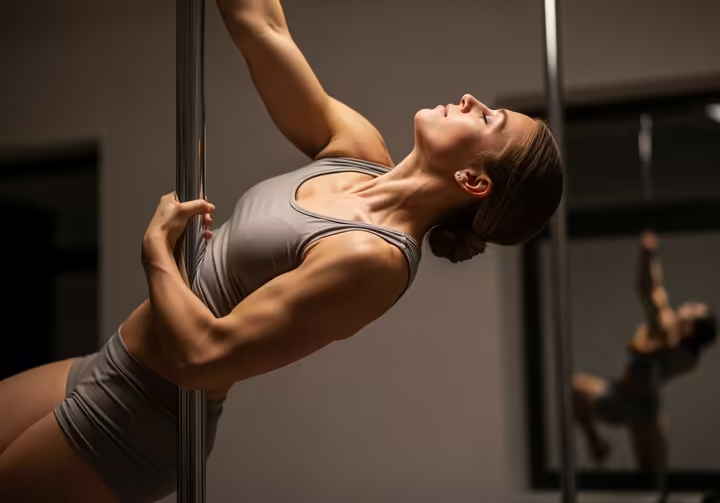
It forces you to see your body as an instrument, not an ornament. 21 You stop caring about how your body looks and start loving what it can do. 22 Success is hitting a new move, not hitting a number on a scale. It’s a fast track to appreciating your body for its power.
Pole is also a training ground for being brave. 24 You have to face your fears, the fear of falling, of not being strong enough, of looking silly. Every time you try that scary new move, you're teaching yourself that you can handle being uncomfortable and that you're tougher than you think. 22
It’s also a safe place to explore your sensual side, but for you and you alone. 23 It's about how the movement feels to you, not how it looks to someone else. 22 Plus, you have to be so focused on not falling that your brain doesn't have time to worry about emails or your to-do list. This "flow state" is basically meditation in motion, a huge stress reliever. 20, 26
Finding Your Crew
The other half of pole's magic is the community. The vibe in a pole studio is the opposite of a competitive gym. It’s supportive, collaborative, and everyone celebrates each other’s wins.
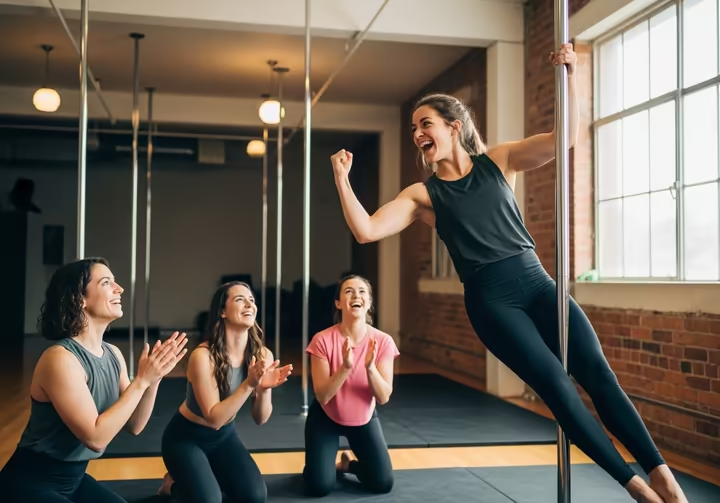
When a student finally nails a trick they’ve been working on, the whole class will cheer. 28 It's a place built on shared struggle and shared success, which creates a powerful sense of belonging. 3 So, if you're worried about being a beginner, don't be. Everyone started there.
This supportive culture is kind of necessary. Learning pole makes you feel vulnerable, you're trying hard things and wearing very little clothing (you need skin grip to stick to the pole!). 20 The constant cheering and encouragement make it a safe space to fail, try again, and grow. 13
The modern pole world is also all about inclusivity. 13 The motto is "pole is for anybody with a body." 3 You’ll see dancers of all ages, genders, and body types. 11 Activists like Roz "The Diva" Mays champion plus-size athletes, and groups like Black Girls Pole, founded by Dalijah Amelia, create space and visibility for Black women in the sport. 3, 10
How Instagram Blew It Up
The final push that took pole global was social media. 29 Suddenly, real people could share their pole journeys on Instagram and TikTok. Instead of seeing stereotypes in movies, you could watch a beginner land their first spin or a mom of three show off her strength.
This wave of authentic posts showed the world that pole dancers are... everyone. It was a massive, grassroots campaign that smashed old stigmas. 29 Dancers even created a hashtag system, like #pdinvert, to create a global library of moves, connecting people from all over the planet. 29
At the same time, pop culture jumped on board. When Jennifer Lopez did that incredible pole routine in the movie Hustlers and at the Super Bowl, studio sign-ups exploded. 2 Musicians like FKA Twigs presented pole as high art in music videos, and TV shows like P-Valley showed its athleticism and artistry. 2 It was the perfect storm of grassroots passion and celebrity validation.
Ready to Climb?
The rise of pole dancing is about more than a workout. It's about taking something back, physically and mentally. It’s a rare activity that builds strength, confidence, and community all at once.
Pole challenges you to be stronger and braver than you thought you were... and gives you a whole crew to cheer you on. It’s the story of millions of people learning to fly, one spin at a time. If you’ve ever wondered what it feels like, maybe it's time to find out.
Works cited
- The Evolution of Pole Dance: From Taboo to Artistic Expression, https://www.prazzleinc.com/editorial/the-evolution-of-pole-dance-from-taboo-to-artistic-expression
- Pole dance - Wikipedia, https://en.wikipedia.org/wiki/Pole_dance
- The evolution of pole artistry is now mainstream - The Charlotte Post, https://www.thecharlottepost.com/news/2023/11/16/arts-and-entertainment/the-evolution-of-pole-artistry-is-now-mainstream/
- selenitestudio.com, https://selenitestudio.com/blog1#:~:text=Contrary%20to%20popular%20belief%2C%20pole,around%20wooden%20or%20metal%20poles.
- Where Did Pole Dancing Originate? | Bucks Clubs, https://www.bucksclubs.com/bucks-cabaret/blog/history-of-pole-dancing/
- Which Country Invented Pole Dancing? A Look at the Origins of This Unique Art Form, https://spincess.store/blogs/information/which-country-invented-pole-dancing-a-look-at-the-origins-of-this-unique-art-form
- (Learn) The Origin and History of Pole Dancing | PolePedia, https://polepedia.com/origin-history-pole-dancing/
- THE HISTORY OF POLE DANCING AS WE KNOW IT - Cheetah Hallandale Beach, https://www.cheetahhallandale.com/news/THE-HISTORY-OF-POLE-DANCING-AS-WE-KNOW-IT/
- FAQs 1 — Nexxus Movement, https://www.nmpoledanceindy.com/advocacy
- Stripping or Sport: The Stigma of Pole Dance - TATLER, https://tatler.lakesideschool.org/4668/sports/stripping-or-sport-the-stigma-of-pole-dance/
- What Is Pole Dancing? Community and Definitions | PolePedia, https://polepedia.com/what-is-pole-dancing/
- Making Pole Dancing a Sport Is Offensive to Strippers - VICE, https://www.vice.com/en/article/pole-dancing-sport-offensive-to-strippers/
- Creating Inclusive Spaces in Pole Dance - Pole Teacher Training, https://www.poleteachertraining.com/blog/creating-inclusive-spaces-in-pole-dance
- 5 Benefits of Pole Dancing - Body & Pole, https://bodyandpole.com/2025/04/16/5-benefits-of-pole-dancing/
- 5 Ways Pole Dancing Can Seriously Boost Your Health - Pole Divas, https://poledivas.com.au/5-ways-pole-dancing-can-seriously-boost-your-health/
- Isometric exercises: Good for strength training? - Mayo Clinic, https://www.mayoclinic.org/healthy-lifestyle/fitness/expert-answers/isometric-exercises/faq-20058186
- 5 off the pole exercises for invert strength (for beginner polers), https://www.thepolept.com/strength-for-pole/5-off-the-pole-exercises-for-invert-strength-beginner/
- Core training for pole dancers (Part 1: Resist the (rotational) force), https://www.thepolept.com/fitness/resist-the-rotational-force-the-key-to-core-strength-for-pole/
- 7 surprising health benefits of pole dancing - Insure4Sport Blog, https://www.insure4sport.co.uk/blog/benefits-of-pole-dancing/
- Five Ways Pole Dancing Boosts Your Mental Health – PoleActive, https://www.poleactive.com/blogs/news/five-ways-pole-dancing-boosts-your-mental-health
- How Everyone Can Find Empowerment Through Pole Dance ..., https://poleconvention.com/general/how-everyone-can-find-empowerment-through-pole-dance/
- Empowering Beliefs: The Psychological Benefits of Pole Dancing ..., https://thestilettogym.com/blogs/news/empowering-beliefs-the-psychological-benefits-of-pole-dancing
- `Empowerment' and the Pole: A Discursive Investigation of the Reinvention of Pole Dancing as a Recreational Activity - ResearchGate, https://www.researchgate.net/publication/247750004_Empowerment'_and_the_Pole_A_Discursive_Investigation_of_the_Reinvention_of_Pole_Dancing_as_a_Recreational_Activity
- Pole Dance and Empowerment: How it Empowers Individuals ..., https://aerialfiftytwo.com/2024/03/03/pole-dance-and-empowerment-how-it-empowers-individuals-beyond-the-studio/
- Ending the Stigma - Sexy Doesn't Equal Bad - Lupit Pole, https://www.lupitpole.com/en/news/pole-dance/ending-the-stigma-sexy-doesn-t-equal-bad
- bodyandpole.com, https://bodyandpole.com/2025/04/16/5-benefits-of-pole-dancing/#:~:text=Stress%20Relief%20and%20Mental%20Well,mood%20and%20mental%20well%2Dbeing.
- 8 Mental and Physical Health Benefits of Pole Dancing - Pleaser Shoes, https://pleasershoes.com/blogs/news/8-health-benefits-of-pole-dancing
- The Impact of Unity: How Community Strengthens the Pole Dance ..., https://www.the-bar.co/post/the-impact-of-unity-how-community-strengthens-the-pole-dance-world
- How do social media affect pole dancing as a practice? - Blogger On ..., https://bloggeronpole.com/2023/06/how-do-social-media-affect-pole-dancing/
- Pole Dance and Media: The Representation and Impact in Popular Culture, https://www.studioxpresents.com/sxp-blog/2024/1/25/pole-dance-and-media-the-representation-and-impact-in-popular-culture